Construction Loans in Georgia: How to Finance Your New Build in 2026
Building your dream home from the ground up in Georgia is an exciting prospect, but financing a new construction project is a very different process than buying an existing home. Instead of a standard mortgage, you will need a specialized construction loan that releases funds in stages as your home is built. With Georgia's housing market continuing to attract new residents and builders responding with new development across the state, understanding how construction loans work has never been more important. Whether you are eyeing a custom build in the North Georgia mountains, a suburban home in the Metro Atlanta area, or a coastal retreat near Savannah, this guide will walk you through everything you need to know about construction loans in Georgia in 2026.
What Is a Construction Loan and How Does It Work?
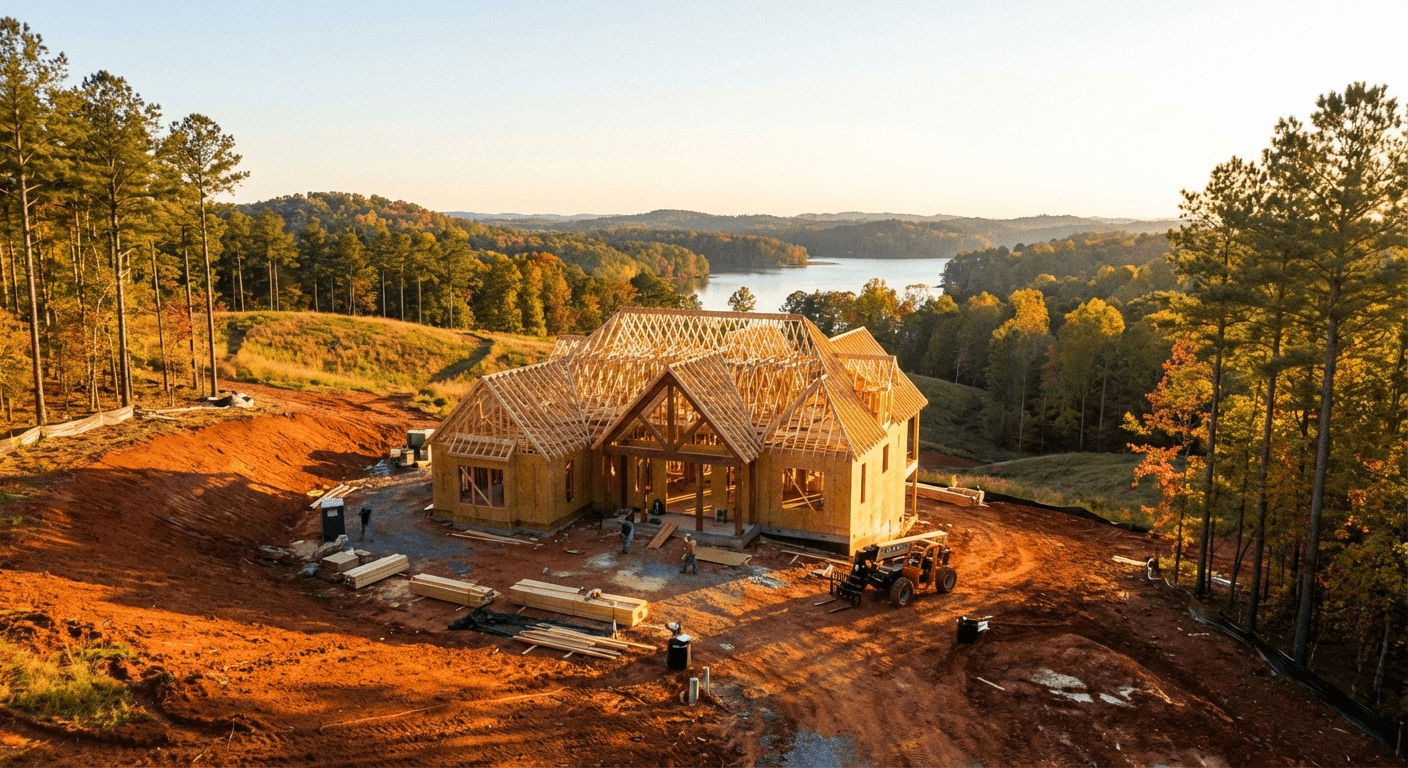
A construction loan is a short-term financing product designed specifically to cover the costs of building a new home. Unlike a traditional mortgage where you borrow a lump sum to purchase an existing property, construction loans work on a draw schedule. This means the lender releases funds to your builder in increments as specific milestones are completed, such as pouring the foundation, framing the structure, or completing the roof.
Construction loans in Georgia typically have terms of 12 to 18 months, which is the expected window for completing a new build. During the construction period, borrowers generally pay only interest on the funds that have been drawn, keeping monthly payments manageable while the project is underway. Once construction is complete, the loan must either be paid off in full or converted into a permanent mortgage.
There are two primary types of construction loans available to Georgia homebuyers:
-
Construction-only loans: These cover just the building phase. When construction is finished, you pay off the loan, often by taking out a separate mortgage. This requires two separate closings and two sets of closing costs.
-
Construction-to-permanent loans: Also known as one-time close loans, these start as construction financing and automatically convert to a traditional mortgage once the home is complete. You only go through one closing, saving both time and money.
For most Georgia borrowers, the construction-to-permanent loan is the more popular and cost-effective choice. It locks in your interest rate and loan terms upfront, protecting you from potential rate increases during the building period.
Qualifying for a Construction Loan in Georgia
Lenders view construction loans as higher-risk products compared to conventional mortgages because they are lending money on a property that does not yet exist. As a result, the qualification requirements tend to be stricter. Here is what most Georgia lenders will look for when you apply for new construction mortgage financing:
Credit Score Requirements
Most conventional construction loans in Georgia require a minimum credit score of 680, though many lenders prefer scores of 720 or higher. Government-backed options like FHA construction loans may allow scores as low as 640. A stronger credit score not only helps you qualify but also gives you access to better interest rates, which can make a significant difference over the life of your loan.
Down Payment
Expect to put down at least 20% for a conventional construction loan in Georgia. Some lenders may accept as little as 10% to 15% with strong compensating factors, but private mortgage insurance (PMI) may apply. Government-backed construction programs may offer lower down payment options for eligible borrowers.
Debt-to-Income Ratio
Lenders typically want your total monthly debt obligations, including the projected new home payment, to represent no more than 43% to 45% of your gross monthly income. Keeping your debt-to-income ratio low strengthens your application considerably.
Builder Approval
One unique aspect of construction loans is that your builder must also be approved by the lender. Lenders want to work with licensed, insured, and experienced contractors who have a demonstrated track record of completing projects on time and within budget. Before you fall in love with a specific builder, verify that they are willing to work with your lender and meet the necessary requirements.
Detailed Construction Plans and Budget
You will need to provide your lender with a comprehensive set of plans, specifications, and a realistic cost breakdown for the entire project. This helps the lender assess the expected value of the completed home and ensures there is enough collateral to support the loan amount.
Understanding how lenders evaluate your application is a critical step. You can learn more about what happens behind the scenes by reading about the Georgia Mortgage Underwriting Process, which applies to construction loans as well as traditional mortgages.
Construction to Permanent Loans in Georgia: A Closer Look
The construction to permanent loan in Georgia has become the preferred financing vehicle for most new home buyers, and it is easy to understand why. With a single closing, you establish your loan terms, lock in your interest rate, and eliminate the uncertainty of having to qualify for a second mortgage after construction is complete.
Here is how the process typically unfolds:
-
Pre-approval and planning: You work with a lender to get pre-approved based on your financials, your builder's credentials, and your construction plans.
-
Closing: You close on the loan before construction begins, signing all documents and establishing the terms of both the construction phase and the permanent mortgage.
-
Draw schedule: As construction progresses, your builder submits draw requests. The lender typically sends an inspector to verify that work has been completed before releasing funds.
-
Interest-only payments: During construction, you pay interest only on the amount drawn, not the full loan balance.
-
Conversion: Once construction is complete and the home passes a final inspection, the loan automatically converts to a traditional amortizing mortgage. Your regular principal and interest payments then begin.
One important consideration is that interest rates on construction-to-permanent loans may be slightly higher than those on standard purchase mortgages, reflecting the additional risk the lender takes on during the building phase. Shopping around and comparing multiple lenders is essential. You can find a helpful comparison in our guide to the Best Mortgage Lenders in Georgia 2026.
Government-Backed Construction Loan Options in Georgia
Not every borrower will qualify for a conventional construction loan or have the funds for a 20% down payment. Fortunately, Georgia homebuyers have access to several government-backed programs that make new construction financing more accessible.
FHA Construction Loans
The Federal Housing Administration offers a construction-to-permanent product called the FHA 203(k) loan for renovations, as well as the FHA one-time close construction loan for new builds. These loans allow down payments as low as 3.5% for borrowers with credit scores of 580 or higher. FHA construction loans are a strong option for first-time buyers who want to build rather than buy. If you are new to the home buying process, it is worth exploring the full range of options available through Georgia First-Time Home Buyer Programs 2026 before committing to a specific loan type.
VA Construction Loans
Eligible veterans and active-duty service members in Georgia can take advantage of VA construction loans, which offer the same core benefits as standard VA purchase loans, including no down payment requirement and no private mortgage insurance. VA construction loans are not offered by every lender, so it pays to work with a lender experienced in this product. To understand the full scope of what is available to you as a veteran, check out the comprehensive VA Loans in Georgia: 2026 Guide.
USDA Construction Loans
For buyers building in eligible rural areas of Georgia, the USDA offers a single-close construction loan with no down payment required. Georgia has substantial rural territory, including many desirable communities outside major metro areas, where USDA financing is available. The income and location eligibility requirements apply just as they do with a standard USDA purchase loan. To determine if your planned build site qualifies, review the full details in our guide to USDA Loans in Georgia.
Georgia Home Builder Financing: Working with Builders Who Offer In-House Options
Another path that many Georgia homebuyers explore is Georgia home builder financing, offered directly through large production builders or their affiliated lending companies. Many of the major homebuilders operating in Georgia, particularly in communities around Atlanta, Augusta, Savannah, and Columbus, have preferred lending partners who specialize in construction financing for their specific developments.
Builder-affiliated financing programs can offer advantages such as streamlined approval processes, reduced closing costs, or builder incentives tied to using their preferred lender. However, it is important to compare these offers carefully against options from independent lenders. Builders have a financial interest in you using their preferred lender, and the rate or terms may not always be the most competitive available.
Key tips when evaluating builder financing in Georgia:
-
Always get a loan estimate from at least one or two independent lenders for comparison purposes.
-
Read all terms carefully, especially regarding rate lock policies during extended build timelines.
-
Ask whether closing cost credits or builder incentives are truly free or simply rolled into the purchase price or interest rate.
-
Confirm that the builder's preferred lender is properly licensed in Georgia and has strong reviews from past customers.
-
Understand what happens if the build takes longer than expected and how any rate lock extension fees are handled.
Semi-custom and fully custom builders, on the other hand, typically require buyers to arrange their own financing independently. In these cases, working directly with a mortgage lender experienced in construction loans is the only route forward.
Important Costs and Considerations for New Construction in Georgia
Building a new home involves more financial complexity than purchasing an existing one. Here are several important factors to keep in mind as you plan your budget:
Land Acquisition
If you do not already own your lot, you will need to factor in the cost of purchasing land. Some construction loans allow you to roll the land purchase into the financing, while others require you to own the land outright before they will approve a construction loan.
Contingency Reserve
Most lenders and experienced builders recommend building a contingency reserve of 10% to 15% of the total construction budget. Unexpected costs, material price changes, and delays are common in new construction, and having a financial cushion prevents the project from stalling.
Permit Fees and Impact Fees
Georgia municipalities and counties charge various fees for building permits, inspections, and utility connections. In fast-growing areas like Forsyth County or Cherokee County, impact fees can add thousands of dollars to the total cost of a new build.
Interest During Construction
Remember that you will be paying interest on drawn funds throughout the construction period. Depending on the size of your loan and how quickly draws are made, this can amount to several thousand dollars before your permanent mortgage payments even begin.
Appraisal Challenges
Construction loan appraisals are based on the projected value of the completed home, using the plans and comparable sales in the area. If comparable sales are limited or construction costs are high, the appraised value may come in lower than expected, which can affect how much you are able to borrow.
Conclusion: Building Your Future in Georgia Starts with the Right Financing
Construction loans in Georgia open the door to creating a home that is truly tailored to your lifestyle, preferences, and long-term needs. Whether you choose a conventional construction-to-permanent loan, a government-backed FHA or VA option, a USDA no-down-payment program, or financing through a production builder, the key is understanding how each product works and selecting the one that aligns with your financial situation and building plans.
The process of financing a new build is more involved than purchasing an existing home, but with the right preparation, an experienced lender, and a qualified builder, it is entirely manageable. Start by getting pre-approved, comparing lenders, verifying your builder's credentials, and making sure your budget accounts for all the costs involved. Georgia's diverse landscape and growing communities make it one of the best states in the country to build in 2026, and the right construction loan is the foundation on which everything else is built.