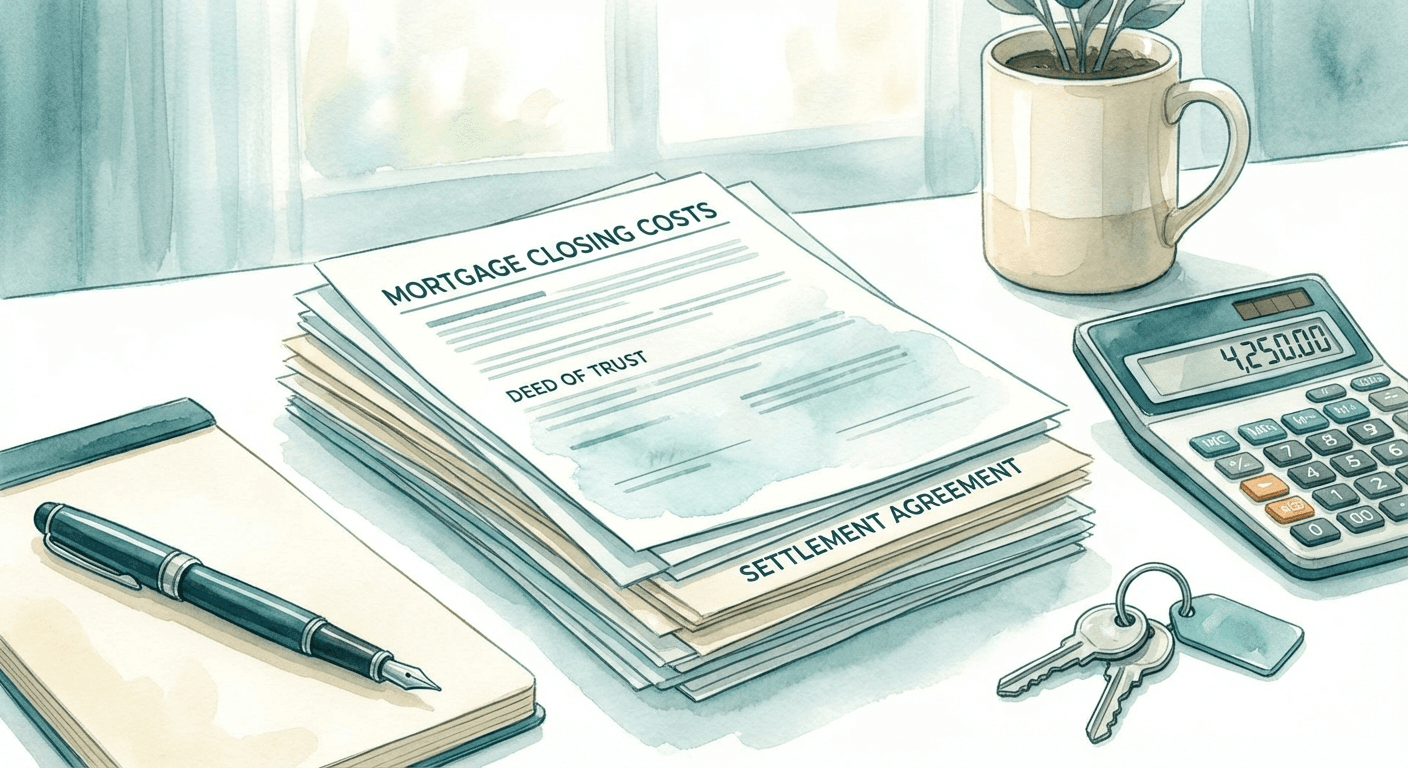
Closing costs catch many Georgia homebuyers off guard. While you've been focused on saving for a down payment, you also need funds for the various fees, taxes, and charges that come due when you close on your home. In Georgia, expect to pay between 2% and 5% of your purchase price in closing costs.
This guide breaks down exactly what you'll pay, who pays for what, and how to minimize these costs in 2026.
What Are Closing Costs?
Closing costs are the fees and expenses required to complete your home purchase, beyond the down payment. They include lender fees, third-party services, government charges, and prepaid items.
Typical Georgia Closing Costs
On a $300,000 home purchase in Georgia, expect:
-
Low estimate: $6,000 (2%)
-
Average: $9,000-$12,000 (3-4%)
-
High estimate: $15,000 (5%)
Breakdown of Georgia Closing Costs
Here's what makes up your closing costs:
Lender Fees
Charges from your mortgage lender:
-
Origination fee: 0.5-1% of loan amount ($1,500-$3,000 on a $300,000 loan)
-
Application fee: $300-$500
-
Underwriting fee: $400-$800
-
Processing fee: $300-$500
-
Credit report fee: $30-$50
-
Rate lock fee: Often waived, but can be $200-$500
Third-Party Fees
Services required to complete the transaction:
-
Appraisal: $400-$600
-
Home inspection: $300-$500 (optional but highly recommended)
-
Survey: $300-$500 (often required)
-
Title search: $200-$400
-
Title insurance (owner's policy): $500-$1,500
-
Title insurance (lender's policy): $300-$800
-
Attorney fees: $500-$1,000 (Georgia requires an attorney for closing)
Government Fees
Taxes and recording charges:
-
Georgia transfer tax: $1 per $1,000 of sale price (so $300 on a $300,000 home)
-
Intangibles tax: $1.50 per $500 of loan amount (or $3 per $1,000) = $900 on a $300,000 loan
-
Recording fees: $100-$250
Prepaid Items
These aren't technically "fees" but are due at closing:
-
Homeowners insurance: First year's premium, typically $1,200-$2,500
-
Property taxes: Prorated from closing date to end of tax period
-
Prepaid interest: Interest from closing date to first payment (daily rate × days)
-
Mortgage insurance: If applicable, upfront premium may be due
Escrow Deposits
Funds to establish your escrow account:
-
Property tax escrow: 2-6 months of property taxes
-
Insurance escrow: 2-3 months of insurance premiums
Georgia-Specific Closing Cost Considerations
Attorney Requirement
Georgia is an "attorney state""”a licensed attorney must oversee real estate closings. This adds $500-$1,000 to your costs but provides legal protection.
Georgia Intangibles Tax
Georgia charges an intangibles tax on new mortgages: $1.50 per $500 of the loan amount (or $3 per $1,000). This is one of Georgia's largest closing cost items.
-
$250,000 loan = $750 intangibles tax
-
$300,000 loan = $900 intangibles tax
-
$400,000 loan = $1,200 intangibles tax
Transfer Tax
Georgia's transfer tax is relatively low at $1 per $1,000 of sale price. Typically split between buyer and seller or negotiated as part of the deal.
Who Pays What in Georgia?
Closing cost responsibility is negotiable, but here's typical practice:
Buyer Typically Pays
-
All lender fees
-
Appraisal
-
Home inspection
-
Lender's title insurance
-
Intangibles tax
-
Prepaid items and escrow deposits
-
Half of closing attorney fees (negotiable)
Seller Typically Pays
-
Real estate commissions
-
Owner's title insurance (Georgia custom)
-
Transfer tax (often split)
-
Half of closing attorney fees (negotiable)
-
Any agreed-upon repairs
Strategies to Reduce Closing Costs
Negotiate Seller Concessions
Sellers can contribute toward your closing costs:
-
Conventional loans: Up to 3% (less than 10% down), 6% (10-25% down), or 9% (25%+ down)
-
FHA loans: Up to 6%
-
VA loans: Up to 4% plus all "normal" closing costs
-
USDA loans: Up to 6%
In a balanced or buyer's market, sellers may agree to concessions to close the deal.
Shop Lenders
Lender fees vary significantly. Get Loan Estimates from at least 3-4 lenders and compare:
-
Origination fees
-
Discount points
-
Underwriting and processing fees
-
Total lender charges
Negotiate Lender Fees
Some lender fees are negotiable:
-
Ask about fee waivers for strong applicants
-
Request to match a competitor's fees
-
Consider lender credits (higher rate, lower fees)
Shop Title and Escrow Services
You have the right to choose your title company. Compare costs"”they can vary by hundreds of dollars.
Use Down Payment Assistance
Many Georgia down payment assistance programs can be applied to closing costs, not just down payment.
Close at End of Month
Closing later in the month reduces prepaid interest charges. Closing on the 28th means only 2-3 days of prepaid interest vs. 30+ days if you close on the 1st.
Ask About No-Closing-Cost Options
Some lenders offer loans with no closing costs in exchange for a higher interest rate. This can make sense if you plan to sell or refinance within a few years.
What to Expect at Closing
At your Georgia closing, you'll:
-
Review and sign final documents with the closing attorney
-
Provide certified or cashier's check for your closing costs (wire transfer increasingly common)
-
Receive keys after funds are disbursed and deed is recorded
Documents You'll Sign
-
Closing Disclosure: Final breakdown of all costs (you'll receive this 3 days before closing)
-
Promissory note: Your promise to repay the loan
-
Deed of trust/Security deed: Gives lender rights to the property if you default
-
Various affidavits and disclosures
Closing Cost Estimates by Loan Type
Different loan programs have different fee structures:
Conventional Loans
-
Standard closing costs
-
No upfront mortgage insurance fee
-
May have PMI if under 20% down
FHA Loans
-
1.75% upfront mortgage insurance premium (can be financed)
-
Slightly higher ongoing MIP than conventional PMI
-
Otherwise similar costs
VA Loans
-
VA funding fee: 2.15% first-time use with 0% down (can be financed)
-
No PMI
-
Limits on some fees lenders can charge
-
Exempt from intangibles tax in Georgia for veterans
USDA Loans
-
1% upfront guarantee fee (can be financed)
-
0.35% annual fee
-
Can finance closing costs if appraised value exceeds purchase price
Common Closing Cost Mistakes
Avoid these pitfalls:
-
Not budgeting enough: Plan for 3-4% even if you hope for less
-
Forgetting prepaid items: Insurance and tax escrow add up
-
Not reviewing the Closing Disclosure: Compare it to your Loan Estimate and question any significant changes
-
Wiring to wrong account: Verify wire instructions by phone"”scammers target real estate transactions
Next Steps
When you receive your Loan Estimate from lenders, pay close attention to Page 2, which details closing costs. Compare estimates from multiple lenders and negotiate where possible.
To maximize your budget, explore down payment assistance programs that can help cover these costs. And if you're working on qualifying for the best rates, review our guide on improving your credit score.
One key closing cost is the appraisal fee. Learn more about the home appraisal process in Georgia and what to expect.
Property taxes are a major component of your ongoing housing costs. Learn more in our complete Georgia property tax guide.
You may also want to understand how mortgage points affect your rate buy-down in Georgia.