The Beltline Premium: Why Homes in West End Just Hit $480K and What to Buy Instead
The Beltline Premium: Why Homes in West End Just Hit $480K and What to Buy Instead If West End has been on your list, the first thing to know is that the old pr
The Beltline Premium: Why Homes in West End Just Hit $480K and What to Buy Instead
If West End has been on your list, the first thing to know is that the old pricing story is over. This is not the version of West End where buyers could still stumble into a historic bungalow near the Beltline for a number that felt comfortably below the rest of intown Atlanta. The premium is here now, and it is showing up in the listings that look even remotely turnkey.
That matters because rates are not helping anybody. Mortgage News Daily's daily index had the 30-year fixed at 6.53% on March 21. Freddie Mac's weekly survey has also been sitting above 6% this month. So when a neighborhood like West End pushes up toward a $480,000 buying conversation, buyers do not just feel it in the headline price. They feel it in the monthly payment, the renovation budget they no longer have room for, and the appraisal risk that creeps in when everybody is chasing the same Beltline-adjacent blocks.
West End is still compelling. The historic housing stock is real. The Beltline effect is real. The location is better than a lot of suburban buyers realize. But if you are shopping here in 2026, you need to be honest about what exactly you are paying for, and whether the same money works harder one neighborhood over.
Why West End got expensive this fast
The short answer is location plus narrative plus scarcity.
West End already had the ingredients buyers tend to chase late in a growth cycle: beautiful older homes, MARTA access, Beltline adjacency, a recognizable historic identity, and enough redevelopment momentum to make people feel like they were buying ahead of the next jump. Once that psychology takes hold, prices move faster than the fundamentals alone would suggest.
And the Beltline matters more than people pretend. Buyers pay for walkability in Atlanta when it is real, not brochure walkability, actual walkability to trails, coffee, parks, breweries, and the kind of weekend routine that makes intown life feel worth the premium. West End has that now in a way it did not a decade ago. That has changed who shops here, how fast they move, and what they are willing to overlook on price.
What $480K actually buys in West End right now
Usually, one of three things.
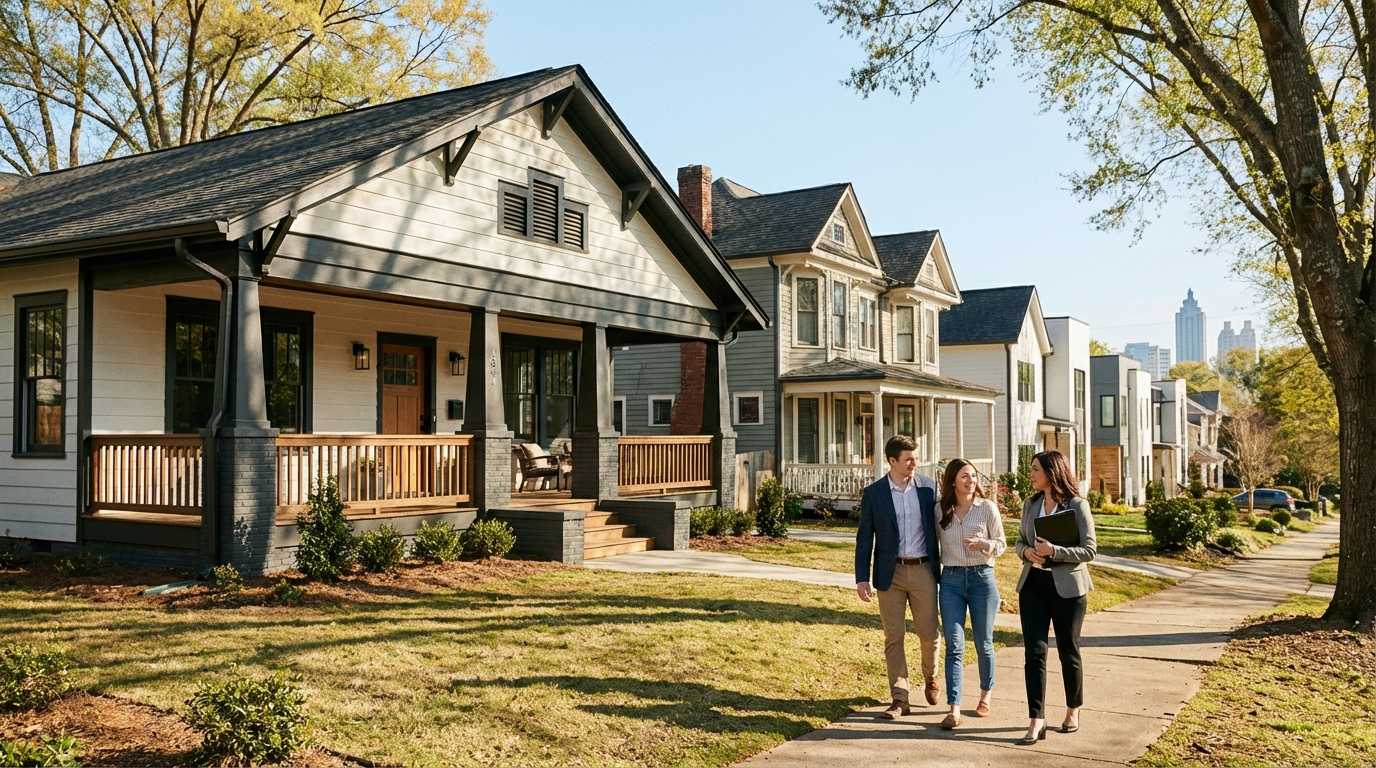
First, a renovated bungalow or foursquare with the details buyers want, front porch, decent kitchen, updated baths, workable systems, and just enough historic charm to feel special on day one. Those are the homes that create the pricing ceiling because they attract the widest pool of buyers and require the least imagination.
Second, a house that looks polished online but still needs more money than the listing suggests. That could mean an older roof, tired windows, drainage issues, or the kind of cosmetic renovation that was designed to photograph well rather than last. West End has enough older housing stock that buyers need to separate "updated" from "properly improved." Those are not the same thing.
Third, a smaller house in the exact micro-location everyone wants, close enough to the Beltline, Lee + White, and the neighborhood core that the seller knows the location itself is carrying part of the value. In those deals, you are not paying only for the house. You are paying to avoid compromise.
The payment shock is where buyers get caught
This is the part buyers need to run carefully with their lender. On a $480,000 purchase, 10% down means a loan around $432,000 before closing costs. At 6.53%, principal and interest lands around $2,735 a month. Put 20% down and finance $384,000, and the principal and interest payment is still roughly $2,430. That is before property taxes, insurance, maintenance, and whatever the first old-house surprise turns out to be.
And old houses always have a surprise.
That is why the West End premium feels heavier than it did when rates were in the low 3s. A buyer could once justify overpaying a little because cheap money made the monthly hit easier to absorb. That safety valve is gone. The same emotional purchase now has to survive a much stricter monthly budget.
West End still makes sense for some buyers
Look, this is not an argument that West End is overpriced in some absolute sense and everyone should bail. The neighborhood still has real strengths that are hard to duplicate. It gives buyers a historic Atlanta feel without forcing them into the highest price bands of Inman Park, Grant Park, or Virginia-Highland. The transit access is useful. The architecture has personality. And for buyers who genuinely plan to live the Beltline lifestyle, not just reference it in conversation, the premium can still make sense.
It is also one of the intown neighborhoods where buyers can still find meaningful house, not just a sleek townhome with no yard and no softness. If someone wants a detached home with a porch, old trees, and some neighborhood texture, West End still delivers that better than a lot of Atlanta zip codes north of I-20.
But the pricing only works if the buyer really values what West End specifically offers. If the goal is simply to be intown-ish with decent upside, there are better places to look.
Buy Oakland City if you want the Beltline without the full premium
Oakland City is the most obvious alternative, and for a lot of buyers it is the smartest one. You still get Southwest Atlanta, Beltline adjacency, older housing stock, and a neighborhood that feels like it has room to run. But the pricing typically lands a notch below West End when you compare similar levels of renovation and lot quality.
That discount matters. It can be the difference between having enough cash left for a proper inspection response and draining everything into the purchase. Oakland City is not as polished, and that is part of the appeal. Buyers who can handle a little less finish and a little more neighborhood variability often come out ahead there.
The key is block selection. Some pockets feel much more stable and established than others, especially around the stronger residential streets and areas with easier Beltline access. This is not a neighborhood to buy blind from listing photos.
Buy Capitol View if you want charm and a little more breathing room
Capitol View is another strong answer for buyers who love the general West End setup but do not need the exact West End label. The housing stock has charm, the neighborhood identity is strong, and you still get good access to the Beltline and the southwest corridor without paying top dollar for every bit of polish.
This is often the better move for buyers who want a real historic house but would rather spend some money after closing than prepay every improvement inside the purchase price. In West End, sellers are increasingly trying to capture the upside of fully renovated inventory. In Capitol View, buyers can still find more room to create value themselves.
And honestly, that can be healthier financially, especially in a higher-rate market.
Buy Adair Park if you care more about upside than perfection
Adair Park still appeals to buyers who are comfortable with a neighborhood that feels active, transitional, and uneven in the way many Atlanta neighborhoods do right before the next pricing jump. It is not for everybody. But if the goal is to stay close to the southwest intown story without paying the strongest version of the West End premium, it deserves a serious look.
There is still enough variation in housing stock and renovation quality there that a sharp buyer can separate cosmetic noise from actual opportunity. It helps to have an agent who knows which streets trade cleanly, where investor work has held up, and where a house is cheap for a reason. But for buyers who can tolerate a little more uncertainty, Adair Park can be a better value play.
Buy East Point if the monthly payment matters more than the Beltline story
This is where some buyers need to get honest with themselves. If the Beltline is nice but not sacred, East Point often gives you more breathing room. You can still stay relatively close to the city, keep access to MARTA, and find detached homes with character at prices that leave more margin for repairs, furniture, and life in general.
No, it is not the same vibe. That is the point.
East Point works best for buyers who want a practical intown-adjacent purchase rather than a socially legible neighborhood brand. And in 2026, that practicality counts for a lot. A lot of buyers do not need the West End premium. They just need a house they can actually afford without hating their monthly payment.
What buyers keep missing about West End taxes, repairs, and insurance
The sticker price is only the first problem. Fulton County taxes are not trivial, especially once a home has been improved and reassessed around a newer purchase price. Insurance on older homes can also land higher than buyers expect, particularly if the wiring, plumbing, or roof history is not clean. And then there are repairs, which are a whole separate line item in neighborhoods full of older homes.
This is where people get hurt by the West End premium. They stretch for the purchase and assume the hard part is over once they close. But old-house ownership in Atlanta has a way of introducing itself fast, water intrusion, crawl-space work, chimney issues, grading, old sewer lines, aging HVAC. None of this is unique to West End. But when you pay close to $480,000 to get in, you have less room to absorb it.
That is one reason nearby alternatives can be better buys even if the houses are a little less polished. They leave you some oxygen.
So, should you still buy in West End?
Yes, if you specifically want West End and the numbers still work comfortably after taxes, insurance, and repair reserves. Not barely. Comfortably.
No, if you are chasing the neighborhood because it feels like the obvious Beltline play and you have not looked carefully at Oakland City, Capitol View, Adair Park, or East Point. Too many buyers are paying for the story first and the actual fit second. That is backwards.
The better way to think about it is simple. If West End's combination of architecture, access, neighborhood energy, and Beltline proximity is the thing you truly want, then the premium may be justified. If what you really want is a strong intown purchase with room for appreciation and a monthly payment that does not pinch, there are still smarter places to buy.
And in this rate environment, smarter usually wins.
Get MortgageInGeorgia in your inbox
Subscribe for Georgia rate updates, Atlanta neighborhood breakdowns, and practical advice for buyers trying to make the numbers work in 2026.
Have Questions?
Our AI assistant Georgia can help you understand your options.