Moving to Peachtree City? The Commute to Midtown Is Rough, But the Schools Make the Math Work
Moving to Peachtree City? The Commute to Midtown Is Rough, But the Schools Make the Math Work If Peachtree City is on the shortlist, the tradeoff shows up fast.
Moving to Peachtree City? The Commute to Midtown Is Rough, But the Schools Make the Math Work
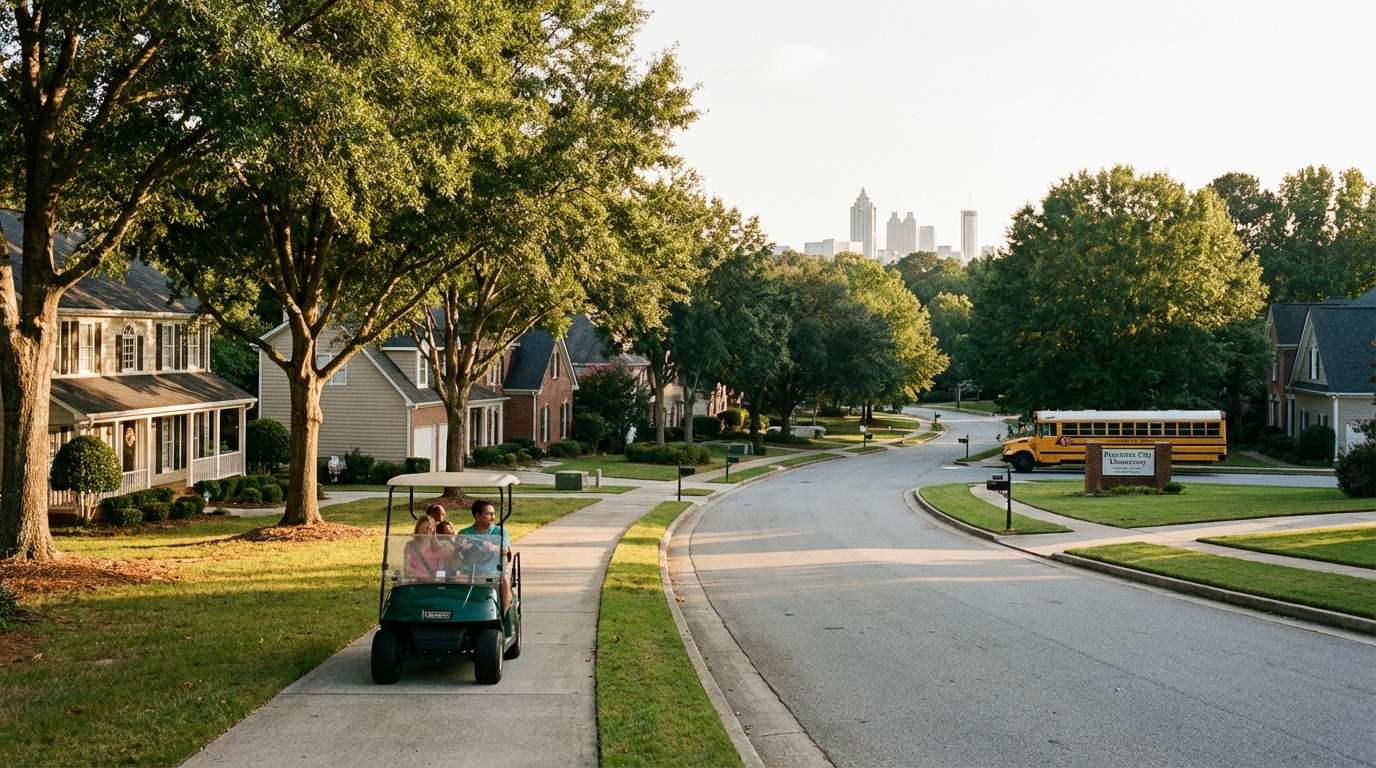
If Peachtree City is on the shortlist, the tradeoff shows up fast. The schools are a real draw. The golf-cart network is not a gimmick. The neighborhoods feel settled, green, and expensive in a way that still reads practical rather than flashy. But the drive to Midtown Atlanta can wear people down, especially if five days in the office is non-negotiable. That is the deal here. Families keep making it anyway.
The market data explains why buyers are still willing to run that calculation. Redfin says the median sale price in Peachtree City was $590,000 in February 2026, down 4.6% year over year, with homes taking about 65 days to sell. Zillow puts the average home value at $567,419, down 0.4% over the past year, with homes going pending in around 49 days as of February 28. That is not cheap, but it is a more balanced market than a lot of close-in Atlanta suburbs. Buyers are getting more time to think, more room to negotiate, and fewer of the truly chaotic bidding situations that still pop up in tighter intown neighborhoods.
Rates are the other half of the story. Mortgage News Daily had the 30-year fixed at 6.43% on March 19, while Freddie Mac's weekly 30-year survey came in at 6.22% for the same date. On a $472,000 loan, roughly 20% down on a $590,000 purchase, that difference is about $2,960 versus $2,894 a month in principal and interest. Not night and day, but enough to matter. And honestly, that is why Peachtree City appeals to a very specific kind of buyer right now: households with strong income, kids in the picture, and just enough flexibility to accept a longer commute in exchange for stability once they get home.
The school argument is not hype
This is the biggest reason people put up with the drive. Peachtree City schools consistently show up as a real asset, not just a marketing line in listing copy. Redfin's school profile for the city shows Braelinn Elementary and Peachtree City Elementary at 9 out of 10 on GreatSchools, with Kedron, Peeples, and Huddleston at 8 out of 10. Families looking in Fayette County already know the names, McIntosh High on the north side conversation, Starr's Mill High on the south side, but even buyers coming from out of state figure it out quickly once they start comparing districts.
That matters because school quality changes the way a monthly payment feels. A $590,000 purchase in Peachtree City can look expensive next to parts of Coweta or Douglas County. But if the alternative is private school tuition, a longer after-school drive, or moving again in three years for district reasons, the math changes. Families are not just buying bedrooms here. They are buying predictability.
And predictability has value. A lot of it.
The commute to Midtown is the tax you keep paying
No point sugarcoating this. If the job is in Midtown, the commute is the biggest downside to Peachtree City. Most drivers are heading north on GA-74 or Peachtree Parkway to I-85, and that route can be fine if the timing is perfect and miserable if it is not. A trip that looks manageable on a map can easily turn into an hour, sometimes longer, once morning traffic stacks up through south Fulton and the downtown connector mess starts doing what it does.
That is why Peachtree City makes the most sense for buyers who are hybrid, remote most of the week, or only need to be in Atlanta a few times a month. For a household with one Midtown commuter and one remote worker, the tradeoff can still work beautifully. For two people driving into the city five mornings a week, it gets old fast. I have seen buyers talk themselves into that setup because the neighborhood felt perfect on Saturday afternoon. By October, they were doing commute math all over again.
Here is what that actually looks like in practice. If school pickup, sports, and dinner at home matter more than being ten minutes from the office, Peachtree City stays attractive. If the job demands late nights in Midtown, easy networking dinners, and constant face time, this location can start to feel farther away than the mileage suggests.
What $550K to $650K usually buys here
This is where Peachtree City gets interesting. In many Atlanta suburbs, that price band now feels squeezed. In Peachtree City, it still buys a real house in an established neighborhood. Buyers can still find traditional two-story homes, ranch layouts, and larger lots near golf-cart paths instead of postage-stamp parcels wedged behind a new construction entrance sign.
The north side of town around Kedron Village and the corridor near Peachtree Parkway tends to appeal to buyers who want easier access out of the city for commuting. The south side around Braelinn and Starr's Mill often wins with families who care more about neighborhood feel and school alignment than shaving a few minutes off the morning drive. Around Crosstown Road and Huddleston Road, buyers get the version of Peachtree City that locals tend to love most, mature trees, quieter streets, and that distinctly planned-community layout that still feels easier to live in than a lot of newer suburban sprawl.
There is also a quality-of-life point buyers should not ignore: the cart paths. People who have never lived here sometimes laugh that off. Then they see kids riding to school events, families heading to parks, and quick runs to shops without getting in the car. It is one of those place-specific things that sounds minor until it changes daily life.
This market is calmer than many buyers expect
The numbers tell a different story than the usual Atlanta suburb panic. Redfin says homes in Peachtree City sold for about 3% below list price on average in February and went pending in around 64 days, while the hottest homes still moved much faster. That means buyers need to stay realistic on the best listings, but they do not have to assume every decent house will be gone by Sunday night.
That is helpful in a rate-sensitive market. When rates bounce around, buyers make mistakes if they feel rushed. They overpay on the house because they are afraid the next one will cost more. Or they wait too long because they are convinced rates will save them. Right now, the middle path makes more sense in Peachtree City. Good homes still sell. Overpriced homes sit. That gives prepared buyers something they have not had much of in metro Atlanta for a while: leverage.
Not unlimited leverage. Just enough to matter.
Property taxes and monthly carrying costs still deserve a hard look
Do not stop at the mortgage payment. Fayette County taxes are not the highest in metro Atlanta, but buyers still need to run the full monthly number before deciding this town is manageable. Insurance, HOA fees in certain neighborhoods, utilities on larger homes, and maintenance on older properties can move the budget faster than expected. This is especially true for buyers stretching to get into a top school zone.
And if the comparison is between Peachtree City and a smaller home closer to Midtown, the right question is not just purchase price. It is total monthly burn plus lifestyle cost. Some families spend more on gas and commute wear here but save money by avoiding private school or childcare complications. Others discover the extra driving, dining on the run, and second-car dependence wipe out the savings they thought they saw.
Talk to a lender about this before falling in love with a floor plan. Run the boring numbers. They are usually the most useful numbers.
Who should seriously consider Peachtree City
Peachtree City works best for buyers who want a long-term family base, not a short-term stop. If the plan is to stay seven to ten years, use the schools, and build routines around Fayette County rather than central Atlanta, this market makes a lot of sense. The city still offers the kind of suburban stability a lot of metro areas have lost: established neighborhoods, respected schools, usable parks, and a day-to-day rhythm that feels easier on families.
It is also a strong fit for hybrid professionals who can absorb a rough commute once or twice a week instead of every day. That buyer gets most of the upside and much less of the downside. And for households moving from higher-cost markets, Peachtree City can still look relatively rational, especially when they compare what $590,000 buys here versus what the same number buys in stronger school districts closer to the urban core.
Who probably should not force it
If nightlife, spontaneous city access, and a short office run are high on the list, this is probably not the move. Same goes for buyers who already know they hate long drives. Peachtree City is not close enough to Midtown to fake that compatibility. The town wins on livability once residents are local. It does not win on urban convenience.
There is also a budget reality. A $590,000 median sale price means buyers shopping under the city median will either need patience, compromise, or a smaller search area. Some will decide nearby Fayetteville, Sharpsburg, or parts of Newnan offer a better balance of cost and commute. That is not a knock on Peachtree City. It just means this market is best when the household priorities are clear from the start.
The bottom line for 2026 buyers
Peachtree City is still one of the easier family suburbs to justify in south metro Atlanta, even with rates elevated and the Midtown commute still annoying. The school case is strong. The housing stock is solid. The market has cooled just enough to give buyers breathing room without turning into a bargain basement. That is a pretty workable setup.
But the town only makes sense if the household really values what it is selling. Space. Schools. Routine. Neighborhood stability. A version of suburban life that still feels intentional. Buyers who want that can make the math work here, especially if commuting is not a daily grind. Buyers who need the city every day probably will not.
If Peachtree City is on the list, the smart next move is simple: get pre-approved, map your real commute to Midtown during actual rush hour, and compare a few neighborhoods around Kedron, Braelinn, and the Starr's Mill side before making a call. This market rewards buyers who are honest about how they actually live.
Get Georgia mortgage updates: Subscribe for weekly Georgia rate moves, city-by-city market breakdowns, and practical guidance for buyers comparing suburbs across metro Atlanta.
Have Questions?
Our AI assistant Georgia can help you understand your options.