Buying a Home in Atlanta, Georgia: 2026 Market Guide
Atlanta has long been one of the most dynamic real estate markets in the Southeast, and 2026 is proving to be no exception. Whether you are a first-time buyer navigating the process for the very first time or a seasoned homeowner looking to upgrade, the Atlanta housing market offers a wide range of opportunities across diverse neighborhoods, price points, and property types. With a thriving job market, world-class universities, a growing tech sector, and a cultural scene that rivals any major American city, Atlanta continues to attract buyers from across the country. But getting into this competitive market requires preparation, local knowledge, and the right financing strategy. This guide breaks down everything you need to know about buying a home in Atlanta in 2026.
The State of the Atlanta Housing Market in 2026
The Atlanta real estate market has shown remarkable resilience over the past several years, and 2026 continues that trend. After a period of elevated mortgage rates that cooled buyer activity in 2023 and 2024, the market has found a new equilibrium. Home prices have stabilized in many neighborhoods, though they remain significantly higher than pre-pandemic levels. Inventory has improved compared to the historically tight conditions seen in recent years, giving buyers slightly more options and negotiating power than they had before.
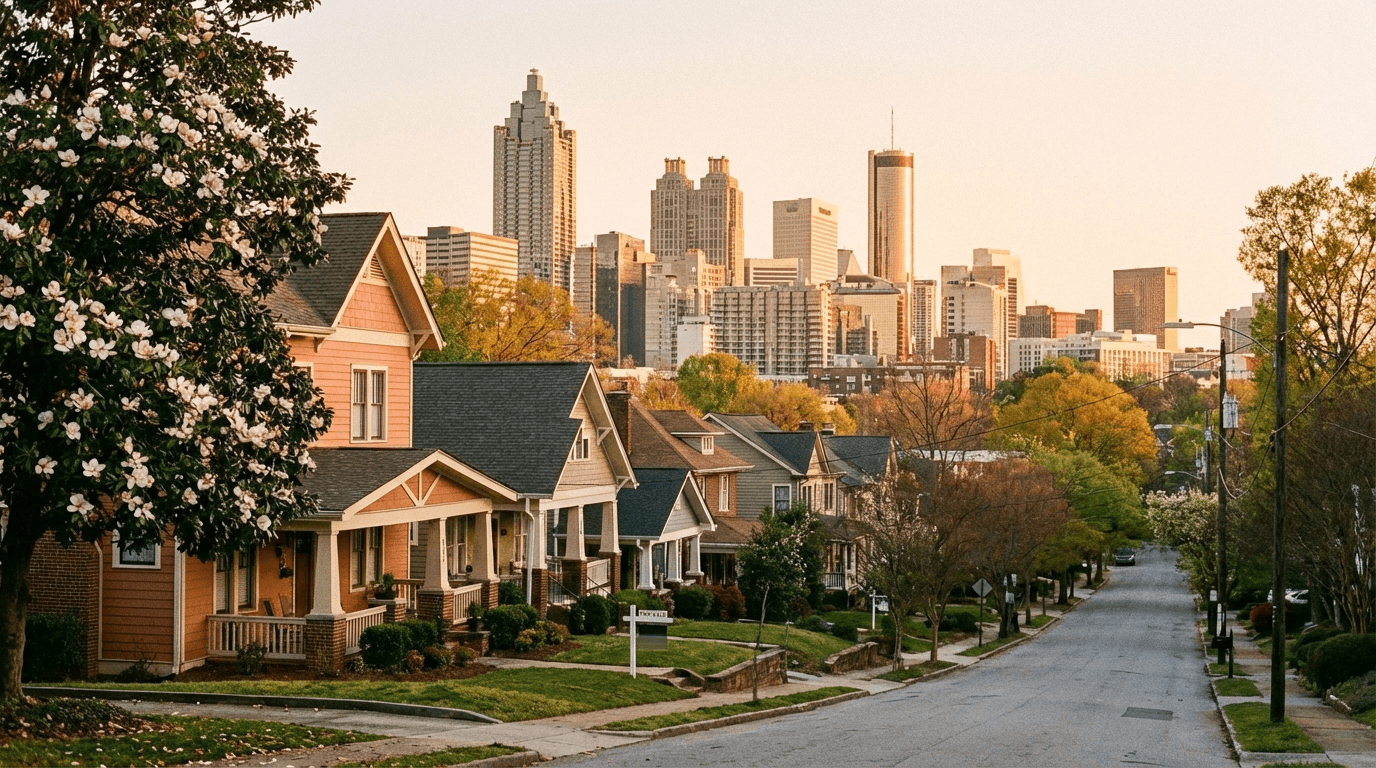
Atlanta home prices vary enormously depending on the neighborhood and property type. In sought-after intown neighborhoods like Buckhead, Virginia Highland, and Midtown, median home prices frequently exceed $500,000 and can push well past $1 million for larger single-family homes. Suburban markets in Alpharetta, Marietta, Smyrna, and Peachtree City offer more affordability, with median prices generally ranging from $350,000 to $550,000. For buyers willing to explore emerging neighborhoods like East Atlanta Village, Westview, or parts of South Fulton, entry points can be significantly lower, often in the $250,000 to $375,000 range.
Days on market have increased slightly compared to the frenzied pace of 2021 and 2022, which means buyers now have more time to conduct due diligence. Multiple offer situations still occur regularly in high-demand areas, but they are no longer the universal experience they once were. Overall, 2026 represents a more balanced Atlanta housing market, though one that still favors sellers in the most desirable zip codes.
Top Atlanta Neighborhoods to Consider in 2026
One of the great strengths of Atlanta real estate is the diversity of its neighborhoods. Each area has its own distinct character, price range, and lifestyle appeal. Understanding the differences between these communities can help you focus your search and find the right fit for your needs.
Intown Atlanta
Neighborhoods like Decatur, Kirkwood, Grant Park, and Candler Park offer walkable, urban living with easy access to MARTA rail lines and major employment centers. These areas tend to attract young professionals and families who value proximity to restaurants, parks, and cultural amenities. Competition is typically strong in these areas, and buyers should be prepared to act quickly when the right property comes along.
Buckhead and Sandy Springs
Buckhead remains Atlanta's premier luxury real estate market. Large estate homes, upscale condominiums, and proximity to high-end shopping and dining make this one of the most prestigious addresses in the Southeast. Sandy Springs, which borders Buckhead to the north, offers similarly upscale options with strong school districts and a slightly more suburban feel.
North Atlanta Suburbs
Alpharetta, Johns Creek, and Cumming have become magnets for families and remote workers seeking top-rated schools, low crime rates, and newer construction. These areas have seen consistent demand and remain some of the fastest-growing communities in the entire metro area. While prices have risen considerably, they still offer better value per square foot compared to intown options.
Affordable and Emerging Areas
Communities like College Park, East Point, and Stonecrest represent opportunities for buyers who want to build equity in areas poised for growth. With infrastructure investment and new development projects underway across South Atlanta, these markets are drawing increasing attention from both first-time buyers and real estate investors.
Securing an Atlanta Mortgage in 2026
Financing is at the heart of any successful home purchase, and understanding your Atlanta mortgage options is essential before you begin your search. Mortgage rates in 2026 remain above the historic lows seen in 2020 and 2021, but they have moderated from the peaks of 2023. Most buyers are seeing rates in the mid-to-upper six percent range for 30-year fixed-rate loans, though your actual rate will depend on your credit profile, loan type, down payment size, and the lender you choose.
Getting pre-approved before you begin shopping is not just advisable in the Atlanta market, it is essentially required. Sellers and their agents expect to see a solid pre-approval letter before entertaining offers, and in competitive situations, a strong pre-approval from a reputable lender can make a meaningful difference. Take time to shop multiple lenders, including local banks, credit unions, and mortgage companies, to compare rates and fees before committing.
Before applying, it is worth understanding how your credit history will affect your loan options. Why Your Credit Score Matters So Much to Georgia Lenders explains how lenders evaluate your creditworthiness and what minimum scores are required for different loan programs. If your score needs improvement, taking a few months to pay down debt and address any errors on your credit report can save you thousands of dollars over the life of your loan.
Common mortgage options available to Atlanta buyers include conventional loans backed by Fannie Mae and Freddie Mac, FHA loans with lower down payment requirements, VA loans for eligible veterans and active military, and USDA loans for buyers in qualifying rural and suburban areas outside the dense urban core.
First-Time Buyer Programs and Down Payment Assistance
One of the biggest barriers to homeownership in Atlanta is the down payment. With home prices where they are, even a five percent down payment on a $400,000 home represents $20,000 in cash that many buyers struggle to save. Fortunately, Georgia offers several programs designed to help buyers bridge this gap.
The Georgia Dream Homeownership Program, administered by the Georgia Department of Community Affairs, provides down payment assistance and below-market mortgage rates to eligible first-time buyers and those who have not owned a home in the past three years. There are also targeted programs for educators, healthcare workers, law enforcement professionals, and active military members. Making Homeownership Possible: Georgia's Best First-Time Buyer Programs provides a thorough breakdown of the available assistance programs, eligibility requirements, and how to apply.
In addition to state programs, the City of Atlanta and Fulton County both offer locally funded assistance programs, and some employers partner with housing agencies to provide homeownership benefits to their workforce. Working with a knowledgeable local lender who is familiar with these programs can help you identify every source of assistance you qualify for.
Understanding Closing Costs in Atlanta
Many buyers focus so heavily on saving for a down payment that they are caught off guard by closing costs. In Georgia, closing costs typically range from two to five percent of the purchase price, which on a $450,000 home could mean $9,000 to $22,500 in additional out-of-pocket expenses. These costs include lender fees, title insurance, attorney fees, property taxes, homeowners insurance prepayments, and various government recording charges.
Georgia is an attorney state, meaning that a licensed real estate attorney must be present at the closing table. Attorney fees are therefore a standard part of every transaction, though the cost can vary. How Much Are Closing Costs in Georgia? walks through each line item you are likely to encounter so you can budget accurately and avoid last-minute surprises.
In some cases, buyers are able to negotiate seller concessions to offset closing costs, particularly in markets where homes are sitting longer or sellers are motivated. An experienced buyer's agent can help you structure an offer that requests concessions without undermining your competitiveness in the eyes of the seller.
Working With a Real Estate Agent in Atlanta
The Atlanta real estate market is complex enough that working with an experienced, local buyer's agent is genuinely valuable. A good agent will help you identify the right neighborhoods for your lifestyle and budget, alert you to new listings as soon as they hit the market, write strong offers that protect your interests, and guide you through the inspection and negotiation process.
When choosing an agent, look for someone with specific experience in the neighborhoods or price ranges you are targeting. Ask about their average list-to-sale price ratio for buyer clients and their familiarity with the current competitive dynamics in your target area. Strong communication and availability are also essential qualities, particularly in a fast-moving market where timing can determine whether you get the home you want.
It is also worth noting that buyer's agent compensation has evolved following recent industry changes. Discuss commission structures openly with any agent you consider working with so you understand how they are compensated and what services are included.
How Atlanta Compares to Other Georgia Markets
While Atlanta dominates the Georgia real estate conversation, it is not the only market worth understanding. Georgia's other cities offer very different experiences in terms of pace, pricing, and lifestyle.
Coastal Georgia has attracted significant buyer interest in recent years, driven by remote work flexibility and the appeal of waterfront living. The Savannah Housing Market in 2026 examines how the Hostess City's historic charm and growing economy are shaping real estate conditions there, including how prices and inventory compare to Atlanta's metro market.
To the east, Augusta presents a more affordable alternative for buyers who want Georgia living without the Atlanta price premium. Augusta Real Estate Market Overview for 2026 covers what buyers can expect in terms of home prices, neighborhood dynamics, and market conditions in the home of the Masters Tournament. For buyers with flexibility on location, comparing Atlanta to these alternative markets can reveal significant savings and different quality-of-life tradeoffs worth considering.
Key Tips for Buying a Home in Atlanta in 2026
-
Get pre-approved early and have your finances fully documented before making offers
-
Research neighborhoods thoroughly, including school ratings, commute times, and flood zone designations
-
Budget for closing costs separately from your down payment to avoid cash shortfalls at the closing table
-
Consider total cost of ownership including HOA fees, property taxes, and homeowners insurance when evaluating affordability
-
Do not skip the home inspection, even in competitive bidding situations where you might be tempted to waive contingencies
-
Explore first-time buyer programs if you qualify, as even modest down payment assistance can meaningfully improve your financial position
-
Work with a real estate attorney who specializes in residential transactions for a smooth closing experience
-
Monitor new listings daily in your target neighborhoods, as desirable homes still move quickly
Conclusion
Buying a home in Atlanta in 2026 requires preparation, patience, and the right team of professionals by your side. The Atlanta housing market remains one of the strongest in the Southeast, offering exceptional long-term value for buyers who do their homework and approach the process strategically. From understanding current Atlanta home prices across diverse neighborhoods to securing competitive mortgage financing and taking advantage of available assistance programs, every step you take to prepare puts you in a stronger position when it is time to make your move. Atlanta is a city of tremendous opportunity, and with the right approach, homeownership here is absolutely within reach.
Also exploring Georgia cities? Check out our guide to buying a home in Columbus, Georgia.
If you are comparing cities across Georgia, you should also read our guide to buying a home in Macon, Georgia for a closer look at prices, neighborhoods, and financing in Middle Georgia.
If you are comparing metro Atlanta with smaller college-town markets, our Athens homebuying guide breaks down what buyers should know about pricing, neighborhoods, and financing in one of Georgia's fastest-moving markets.