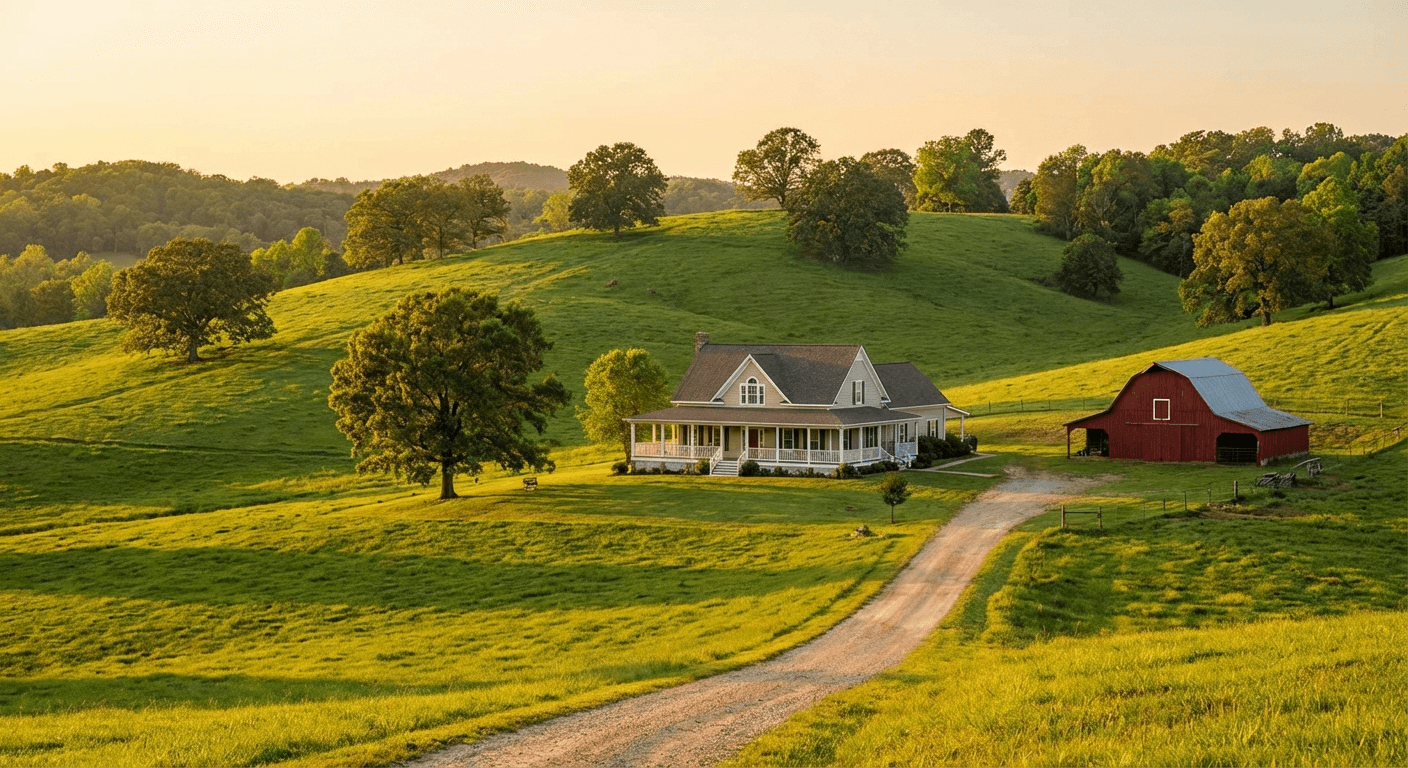
Dreaming of owning a home in Georgia but worried you cannot afford a down payment? A USDA loan Georgia program might be exactly what you need. The United States Department of Agriculture's Rural Development loan program offers eligible buyers the rare opportunity to purchase a home with absolutely zero down payment, making homeownership accessible for thousands of Georgians who thought it was out of reach. Whether you are eyeing a charming farmhouse outside Athens, a cozy bungalow near Valdosta, or a newer construction home in a small town between Savannah and Augusta, the USDA mortgage 2026 program could be your path to owning a piece of the Peach State. This guide breaks down everything you need to know about USDA loans in Georgia, from eligibility requirements to the application process and beyond.
What Is a USDA Loan and How Does It Work in Georgia?
A USDA loan is a government-backed mortgage program created to encourage homeownership and economic development in rural and suburban communities across the country. In Georgia, these loans are administered through the USDA Rural Development office and are available in hundreds of eligible areas throughout the state. The program is sometimes called a Georgia rural development loan because of its focus on less densely populated regions.
There are two primary USDA loan programs available to Georgia homebuyers:
-
USDA Guaranteed Loan: This is the most popular option and is issued by approved private lenders. The USDA guarantees the loan, which reduces risk for lenders and allows them to offer favorable terms to borrowers. Most homebuyers use this option.
-
USDA Direct Loan: This loan is issued directly by the USDA and is designed for very low and low-income borrowers. Interest rates can be subsidized to as low as 1%, making it an extraordinary option for buyers with limited financial resources.
Both programs allow for zero down payment financing, meaning you can finance 100% of the home's purchase price. This is one of only two major loan programs in the United States that offer this benefit, the other being the VA loan available to military veterans. If you want to compare, check out the VA Loans in Georgia: 2026 Guide to see which program might be the better fit for your situation.
USDA Loan Eligibility Requirements in Georgia for 2026
Before you get excited and start browsing listings, it is important to understand the eligibility requirements for the USDA mortgage 2026 program. There are three main categories of eligibility: property location, income limits, and borrower qualifications.
Property Location Eligibility
Not every home in Georgia qualifies for a rural home loan Georgia program. The property must be located in a USDA-designated rural or suburban area. Fortunately, the USDA's definition of "rural" is broader than most people expect. Many areas within 30 to 60 miles of major cities like Atlanta, Savannah, and Columbus qualify. Some popular Georgia communities that have historically had USDA-eligible areas include:
-
Warner Robins and surrounding Houston County communities
-
Statesboro and Bulloch County
-
Tifton and Tift County
-
Hinesville and Liberty County
-
Dalton and surrounding areas in Murray County
-
Many communities in Northeast Georgia, including parts of Hall and Habersham counties
You can check whether a specific property address is eligible using the USDA's online eligibility map tool at eligibility.sc.egov.usda.gov. Keep in mind that eligible areas can change, so always verify with your lender or the USDA directly when applying in 2026.
Income Limits for Georgia Buyers
USDA loans are designed for low to moderate income households, so there are income limits that vary by county and household size. For the USDA Guaranteed Loan program in Georgia in 2026, the general income limit for households of one to four people is approximately $110,650, while households of five to eight people may qualify with incomes up to approximately $146,050. However, these figures can change annually and vary by county, so you should verify current limits with a USDA-approved lender.
Importantly, the USDA counts all household income, not just the income of borrowers on the loan. This includes the income of all adults living in the home, even if they are not on the mortgage. Make sure you understand how your household income is calculated before assuming you qualify or are disqualified.
Borrower Credit and Financial Requirements
While USDA loans are more flexible than conventional loans, lenders still have credit requirements that borrowers must meet:
-
Credit score: Most USDA-approved lenders require a minimum credit score of 640 for the streamlined underwriting process, though some lenders may approve lower scores with manual underwriting.
-
Debt-to-income ratio: Your total monthly debt payments, including the proposed mortgage payment, generally should not exceed 41% of your gross monthly income, though exceptions can be made.
-
Stable employment history: Lenders typically want to see two years of consistent employment or income history.
-
U.S. citizenship or permanent residency: Borrowers must be U.S. citizens, non-citizen nationals, or qualified aliens.
-
Primary residence requirement: The home must be your primary residence. USDA loans cannot be used for investment properties or vacation homes.
The True Cost of a USDA Loan: Fees and Interest Rates
While the zero down payment Georgia benefit is a massive advantage, USDA loans do come with some costs that borrowers should understand upfront.
USDA Guarantee Fees
The USDA Guaranteed Loan program charges two types of mortgage insurance fees, which help fund the program and offset the risk to the government:
-
Upfront Guarantee Fee: Currently set at 1% of the total loan amount. For example, on a $250,000 loan, this fee would be $2,500. The good news is that this fee can be rolled into the loan amount rather than paid out of pocket at closing.
-
Annual Fee: Currently 0.35% of the outstanding loan balance per year, charged monthly. On that same $250,000 loan, this works out to approximately $72.92 per month in the first year.
These fees are significantly lower than FHA mortgage insurance premiums, making USDA loans a more cost-effective option for eligible buyers. For a full comparison, you can read the FHA Loans in Georgia: 2026 Complete Guide.
Interest Rates
USDA guaranteed loans typically offer competitive interest rates that are close to or slightly below conventional loan rates. Because the loans are backed by the government, lenders can afford to offer favorable terms. In 2026, USDA rates in Georgia have remained competitive with overall market conditions, making this program even more attractive compared to conventional financing.
Closing Costs
Even though there is no down payment required, USDA loan borrowers in Georgia are still responsible for closing costs, which typically range from 2% to 5% of the loan amount. However, there are ways to minimize this burden. Sellers can be asked to contribute to your closing costs as part of the purchase negotiation, and in some cases, excess loan funds can be used to cover closing costs if the home appraises for more than the purchase price. To learn more about what to expect, read our detailed guide on Georgia Closing Costs 2026.
How to Apply for a USDA Loan in Georgia: Step by Step
Navigating the USDA loan application process does not have to be overwhelming. Here is a straightforward roadmap to help you get started:
Step 1: Check Your Eligibility
Use the USDA's online property eligibility map to confirm that the area where you want to buy qualifies. At the same time, estimate your household income and compare it to the current income limits for your Georgia county and household size.
Step 2: Find a USDA-Approved Lender
Not all lenders offer USDA loans. Look for mortgage lenders in Georgia that are specifically approved by the USDA to originate guaranteed loans. Local credit unions, regional banks, and national mortgage companies often participate in the program. Ask specifically about their experience with USDA loans, as this can affect how smoothly your application proceeds.
Step 3: Get Pre-Approved
Before you start shopping for homes, get a pre-approval letter from your lender. This involves submitting documentation including pay stubs, tax returns, bank statements, and information about all household members' income. Pre-approval gives you a clear budget and signals to sellers that you are a serious buyer.
Step 4: Find an Eligible Home
Work with a real estate agent familiar with USDA loans. The home you purchase must meet certain condition standards set by the USDA. It must be a modest single-family home, and it cannot include amenities considered excessive for the area, such as an in-ground swimming pool in some cases. The home must also pass an appraisal that confirms its value and meets basic safety and livability standards.
Step 5: Complete the Loan Application and Underwriting
Once you have a signed purchase contract, your lender will submit your full loan application to the USDA for approval. This process typically takes between 30 and 60 days in 2026, though timelines can vary based on USDA office workload and application completeness.
Step 6: Close on Your New Home
Once approved, you will move to closing, where you will sign all the necessary documents and take possession of your new Georgia home. Remember to budget for closing costs even though you are not making a down payment.
Combining USDA Loans with Other Georgia Homebuyer Programs
One of the most underutilized strategies among Georgia homebuyers is combining USDA financing with other state and local assistance programs. While USDA loans already eliminate the down payment hurdle, you may still need help covering closing costs or reserves.
The Georgia Dream Homeownership Program, administered by the Georgia Department of Community Affairs, offers down payment assistance that can be used alongside USDA loans to help cover closing costs. Explore all available options by reading about Georgia Down Payment Assistance Programs 2026 and Georgia First-Time Home Buyer Programs 2026 to see what combination of resources could work best for your situation.
By stacking these programs strategically, many Georgia buyers are able to purchase a home with virtually no out-of-pocket expenses at all, a remarkable achievement that more buyers should know is possible.
Pros and Cons of USDA Loans in Georgia
Like any mortgage product, USDA loans have both advantages and limitations. Here is a balanced look at both sides:
Advantages
-
Zero down payment required, the biggest benefit for buyers without savings
-
Competitive interest rates that are often lower than conventional loans
-
Lower mortgage insurance costs compared to FHA loans
-
Flexible credit requirements with options for manual underwriting
-
Closing costs can sometimes be rolled into the loan or covered by seller concessions
-
Available for new construction as well as existing homes
Limitations
-
Geographic restrictions mean the home must be in an eligible rural or suburban area
-
Income limits may exclude higher-earning households
-
The home must be used as a primary residence only
-
Property condition standards may disqualify some fixer-upper homes
-
The application and approval process can be slower than conventional loans due to the extra USDA review step
-
Loan limits apply, though they are generally adequate for rural Georgia home prices
Is a USDA Loan Right for You in 2026?
If you are a low to moderate income buyer looking to purchase a home in a qualifying rural or suburban area of Georgia and you have limited savings for a down payment, the USDA loan Georgia program is likely one of the best financing options available to you in 2026. The combination of zero down payment, competitive rates, and lower mortgage insurance costs makes it a genuinely powerful tool for building wealth through homeownership.
That said, every buyer's financial situation is unique. If you are a veteran, the VA loan program may offer even better terms. If you are buying in an urban area of Georgia, FHA or conventional loans may be your primary options. And if you simply need help closing the financial gap, the various Georgia state and local assistance programs can make an enormous difference.
Conclusion: Your Path to Zero Down Payment Homeownership in Georgia
The USDA loan Georgia program remains one of the most powerful and least publicized mortgage options available to Peach State buyers in 2026. With zero down payment requirements, competitive interest rates, and coverage across a surprisingly large portion of the state, this rural home loan Georgia option deserves serious consideration from any buyer who qualifies. By understanding the eligibility requirements, working with an experienced USDA-approved lender, and exploring how to combine this program with other Georgia homebuyer resources, you can turn the dream of homeownership into a reality without draining your savings account. Take the first step today by checking your property eligibility and connecting with a lender who can walk you through the process from start to finish. Your Georgia home is closer than you think.
Looking for state-sponsored assistance? Read our guide to Georgia first-time homebuyer programs and down payment assistance.