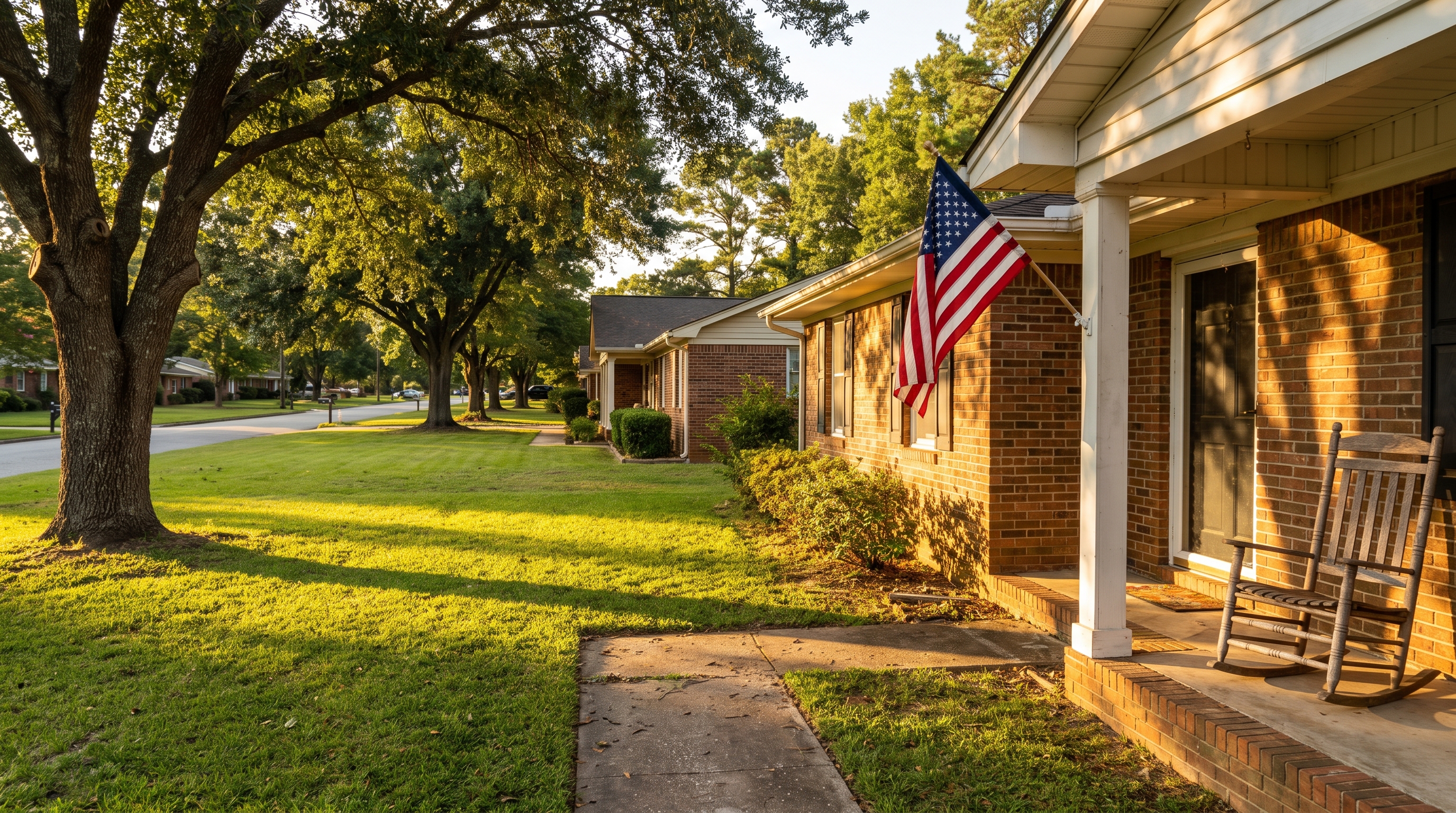
Not everyone who wants to live in Georgia wants a condo in Midtown Atlanta. Many buyers are looking at land in Lowndes County, a farmhouse outside Statesboro, or a quiet community near Tifton. If you're one of them, there's a mortgage program that could help you buy with no money down and competitive rates.
It's called the USDA loan, and it's one of the most underused home financing tools in the state.
What Is a USDA Loan?
The USDA Rural Development Guaranteed Housing Loan Program is a federal mortgage program administered by the U.S. Department of Agriculture. Despite the name, you don't need to farm or ranch to qualify. You just need to buy a home in an eligible rural or suburban area.
USDA loans offer several advantages that set them apart from conventional mortgages:
-
No down payment required (100% financing)
-
Below-market interest rates
-
Lower mortgage insurance costs than FHA loans
-
No prepayment penalties
-
Flexible credit requirements
For Georgia buyers who want space, land, or a quieter lifestyle without coming up with 3.5% to 20% down, this program can be the difference between buying now versus waiting years to save.
USDA Loan Eligibility in Georgia
There are two main eligibility requirements: the property must be in an eligible area, and the borrower must meet income limits.
Property Location Eligibility
USDA eligibility is based on population density and designation, not just whether an area "feels" rural. The USDA defines eligible areas as communities with populations under 35,000 that are not part of a metropolitan area.
In Georgia, this covers a surprising amount of the state. Eligible areas include:
-
Most of South Georgia (Valdosta area outskirts, Tifton, Douglas)
-
Parts of North Georgia (Blue Ridge, Dahlonega, Hiawassee)
-
Much of Middle Georgia outside major cities
-
Communities around Savannah's outer suburbs
-
Smaller cities like Waycross, Bainbridge, Fitzgerald, and Milledgeville
-
Rural communities in counties like Candler, Tattnall, Bacon, and Pierce
What's NOT eligible: Atlanta metro area, Savannah city proper, Augusta city, Columbus city, Macon city, and most of their immediate suburbs.
You can check eligibility for any Georgia address at the USDA's official eligibility map tool. Enter the address and the system tells you instantly if it qualifies.
Income Limits
USDA loans have household income limits designed to serve moderate-income buyers. For 2026, the limits in most Georgia counties are:
-
1-4 person household: up to $112,450 annually
-
5-8 person household: up to $148,450 annually
High-cost counties may have slightly higher limits. Income is calculated as gross household income, including all adults in the home whether or not they're on the loan.
The income limit surprises many buyers. They assume USDA is only for very low-income households. In reality, a Georgia family earning $100,000 per year can still qualify in most rural counties.
Credit Requirements
USDA doesn't have a strict minimum credit score requirement, but most approved lenders want to see at least a 640 score for automated underwriting approval. Borrowers with scores below 640 can still qualify through manual underwriting, which takes longer but isn't impossible.
Other credit factors:
-
No major derogatory events (bankruptcy discharged at least 3 years, foreclosure cleared at least 3 years)
-
Demonstrated ability to manage recurring debts
-
No outstanding federal debt delinquencies
Debt-to-income ratios are flexible. USDA allows up to 41% back-end DTI with automated approval, and up to 44% or higher with manual underwriting and compensating factors.
USDA Loan Costs in Georgia
Funding Fees
USDA loans don't have a traditional down payment, but they do charge a funding fee:
-
Upfront guarantee fee: 1% of the loan amount (added to your loan balance)
-
Annual fee: 0.35% of the outstanding loan balance per year (paid monthly)
Compare that to FHA: FHA charges 1.75% upfront and 0.55% annually. USDA is meaningfully cheaper on mortgage insurance over time.
On a $200,000 USDA loan:
-
Upfront fee: $2,000 (financed into the loan)
-
Annual fee: $700/year or about $58/month
After several years, as your balance decreases, the annual fee shrinks too. FHA's annual MIP stays at a fixed percentage and doesn't drop unless you refinance.
Interest Rates
USDA guaranteed loans are market-rate mortgages. Your actual rate depends on current market conditions, your credit profile, and your chosen lender. However, USDA loans typically price similarly to conventional conforming loans, often better than FHA rates.
In February 2026, USDA loan rates in Georgia for a well-qualified borrower are running in the 6.0% to 6.5% range on 30-year terms.
Who Should Consider a USDA Loan?
First-time buyers with limited savings. If you have decent income but haven't had years to build a down payment, USDA lets you buy without one. A Georgia family earning $85,000 per year can buy a $250,000 home with $0 down and just closing costs to cover.
Buyers relocating to rural Georgia. Remote workers moving from Atlanta or other metro areas to smaller Georgia communities often find USDA a perfect fit. They earn good salaries, want more space, and are buying in exactly the type of community USDA was designed to help.
Anyone avoiding PMI costs. USDA's annual fee (0.35%) is substantially lower than conventional PMI for buyers with less than 20% down. Even buyers who could scrape together 3% or 5% down might be better off financially with a USDA loan.
Buyers in competitive rural markets. Zero down means more of your cash stays available for closing costs, negotiations, or repairs after purchase.
How Georgia USDA Loans Compare to Other Programs
| Feature | USDA | FHA | Conventional | VA | | --- | --- | --- | --- | --- | | Down Payment | 0% | 3.5% | 3-20% | 0% | | Min. Credit Score | 640 (guideline) | 580 | 620 | No minimum | | Mortgage Insurance | 0.35%/yr | 0.55%/yr | Varies | None | | Upfront Fee | 1% | 1.75% | None | 2.3-3.6% | | Location Restriction | Rural areas only | None | None | None | | Income Limit | Yes | None | None | None |
USDA's main limitation is geography. VA loans are zero-down with no mortgage insurance at all, but require military service. If you're not a veteran and you're buying in a USDA-eligible area, USDA is almost always the better financial choice compared to FHA or low-down conventional loans.
The USDA Loan Process in Georgia
Step 1: Check Eligibility
Before anything else, confirm two things: the property is in an eligible area, and your household income is under the limit. Both checks take five minutes online.
Step 2: Get Pre-Approved
Work with a USDA-approved lender. Not every lender does USDA loans. Ask specifically whether they're approved to originate USDA guaranteed loans. In Georgia, many regional banks, credit unions, and mortgage brokers have USDA approvals.
Gather your documents: last two years of tax returns, two months of bank statements, pay stubs for the past 30 days, and a government-issued ID.
Step 3: Find Your Property
With pre-approval in hand, you can shop with confidence. Make sure any home you're interested in is in an eligible area and passes a USDA property inspection. The home must be your primary residence and meet basic safety and livability standards.
USDA loans can't be used for investment properties or vacation homes.
Step 4: Loan Processing
Once under contract, your lender submits the file to USDA for a conditional commitment. USDA typically takes 2-3 weeks to review and issue approval. Total closing timelines run 45-60 days, slightly longer than conventional loans.
Step 5: Close and Move In
At closing, you'll owe closing costs (typically 2-5% of the loan amount). Many sellers will negotiate closing cost contributions, and some states offer closing cost assistance programs that layer with USDA. Check whether the Georgia Dream program can help cover closing costs.
Georgia's Best USDA-Eligible Communities
Dahlonega (Lumpkin County): North Georgia mountain town with a strong arts scene, wineries, and Appalachian Trail access. College town atmosphere, affordable homes, and growing appeal with remote workers.
Tifton (Tift County): Agricultural hub in South Georgia with a low cost of living, solid public infrastructure, and homes priced well below state averages.
Milledgeville (Baldwin County): Historic capital city with Georgia College and State University creating a vibrant community. Excellent value for the price.
Douglas (Coffee County): Small city with a strong sense of community, low crime, and home prices well within USDA income limits.
Bainbridge (Decatur County): Lakeside community near Lake Seminole with outdoor recreation, affordable homes, and a stable local economy.
Common USDA Misconceptions
"USDA loans are slow and hard to close." Modern USDA lenders have streamlined the process significantly. If your file is clean and complete, you can close in 45 days or less.
"The property needs to be farmland." Not at all. A suburban-style neighborhood on the edge of a small town qualifies as long as the town is in an eligible area.
"I make too much to qualify." Most Georgia buyers who think this are wrong. The income limit in Georgia is higher than people expect, especially for larger households.
Start Your USDA Loan Research Today
If you're buying in rural or suburban Georgia, a USDA loan is worth 30 minutes of your time to investigate. Check the USDA eligibility map for your target area, run your household income against the limits, and talk to a USDA-approved Georgia lender.
Zero down payment, competitive rates, and lower mortgage insurance than FHA: it's a combination hard to beat if your property qualifies.
For more on Georgia mortgage programs, read our guide to FHA loans in Georgia and our overview of the VA loan program for Georgia veterans. If you need help figuring out what you can afford, start with our mortgage pre-approval guide.