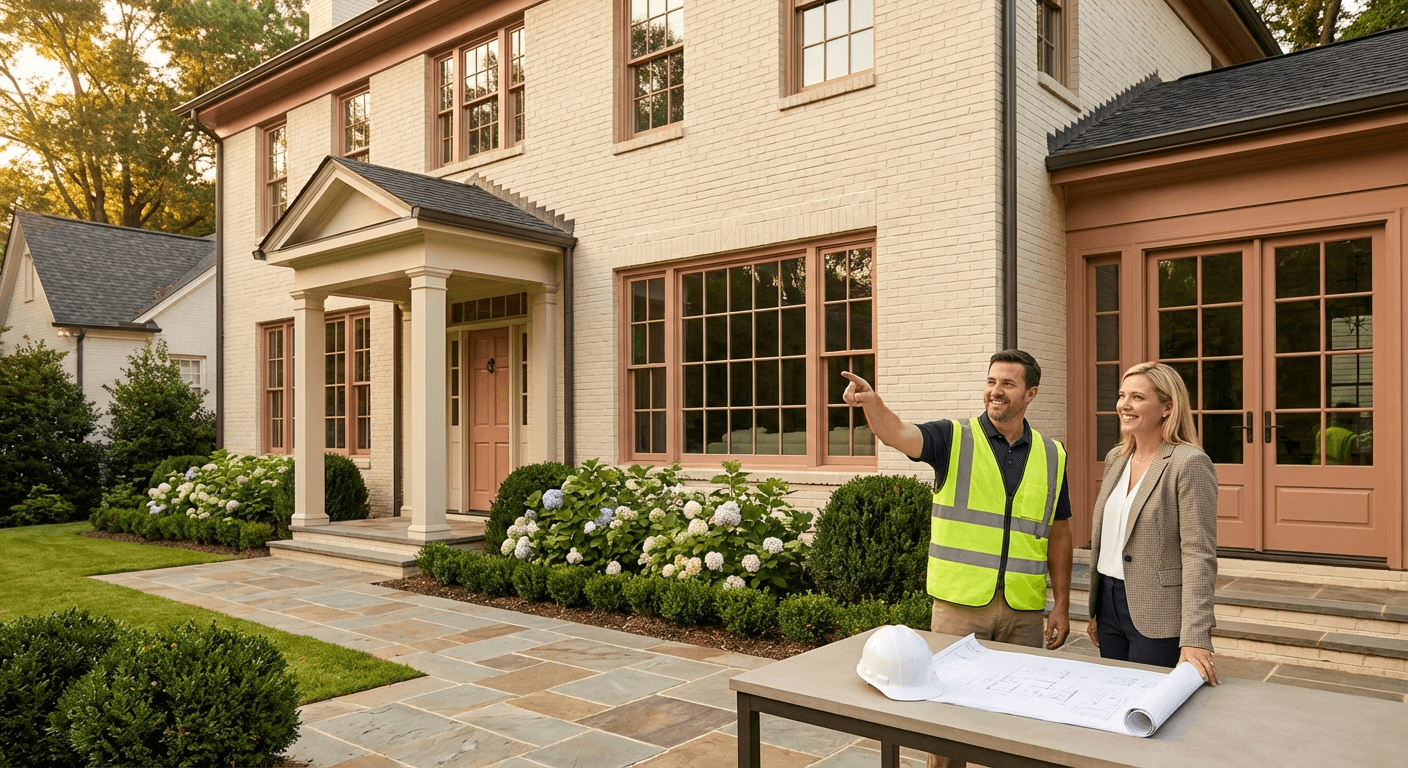
Georgia's housing market is packed with opportunity, especially for buyers willing to roll up their sleeves and invest in a property that needs a little love. Whether you've spotted a charming Victorian in Savannah that needs a full gut renovation or a solid ranch home in Marietta with an outdated kitchen, renovation loans can help you purchase and improve a fixer-upper with a single mortgage. Two programs lead the pack in 2026: the FHA 203k loan and the Fannie Mae HomeStyle loan. Both allow Georgia homebuyers and homeowners to finance the cost of renovations alongside their mortgage, but they work differently and serve different borrowers. This guide breaks down everything you need to know about renovation loans in Georgia so you can choose the right path forward.
What Are Renovation Loans and Why Do They Matter in Georgia?
A renovation loan combines the purchase price of a home and the estimated cost of improvements into one single mortgage. Instead of buying a home and then scrambling to find separate financing for repairs, you close on one loan, use the funds to purchase the property, and draw on a reserved portion to pay contractors as work is completed. This streamlined approach makes fixer-upper mortgage programs a powerful tool in Georgia's competitive real estate market.
Georgia has no shortage of older housing stock, particularly in metro Atlanta neighborhoods like East Point, Kirkwood, and Edgewood, as well as in historic districts throughout Augusta, Macon, and Columbus. Many of these homes are priced below market value precisely because they need work. Renovation loans allow buyers to acquire these properties, build instant equity through improvements, and end up with a home that reflects both their taste and their investment.
Renovation loans are also useful for existing homeowners who want to upgrade their current property but don't have the cash reserves to pay out of pocket. While programs like Home Equity Loans and HELOCs in Georgia are popular options for tapping existing equity, renovation loans can be a smarter choice when equity is limited or when you're buying a home that hasn't yet appreciated in value.
FHA 203k Loans in Georgia: The Basics
The FHA 203k loan is a government-backed mortgage insured by the Federal Housing Administration. It is specifically designed to help buyers and homeowners finance both the purchase or refinance of a property and the cost of renovating it. If you're already exploring government-backed options, you may want to review our full FHA Loans in Georgia: 2026 Guide to understand the broader FHA landscape before diving into the 203k specifically.
Standard 203k vs. Limited 203k
There are two versions of the FHA 203k loan available to Georgia borrowers:
-
Standard 203k: Designed for major renovations, including structural repairs, room additions, foundation work, and full kitchen or bathroom remodels. It requires a HUD-approved 203k Consultant to oversee the project and has no cap on renovation costs beyond the FHA loan limits for your county.
-
Limited 203k (Streamline): Designed for smaller, non-structural projects with renovation costs capped at $35,000. Common uses include replacing flooring, updating appliances, repainting, and minor bathroom updates. No consultant is required, making the process simpler and faster.
FHA 203k Eligibility Requirements in Georgia
To qualify for an FHA 203k loan in Georgia in 2026, borrowers generally need to meet the following requirements:
-
A minimum credit score of 580 for a 3.5% down payment, or 500-579 with a 10% down payment
-
A debt-to-income ratio generally no higher than 43-45%
-
The property must be a primary residence (investment properties do not qualify)
-
The property must be at least one year old
-
Work must be completed by a licensed contractor, not the borrower themselves
-
Renovations must be completed within six months of closing
Georgia FHA loan limits vary by county. In 2026, high-cost areas like Fulton, Gwinnett, and Cobb counties have higher limits than rural counties in South Georgia. Your lender can confirm the specific limit for the county where you're purchasing.
Eligible Renovations Under FHA 203k
The FHA 203k covers a wide range of improvements, including roof replacement, HVAC upgrades, plumbing and electrical work, window replacement, accessibility modifications, landscaping, and even the addition of energy-efficient features. Luxury improvements like swimming pools and outdoor kitchens are generally not eligible under this program.
Fannie Mae HomeStyle Loan in Georgia: A Flexible Conventional Option
The Fannie Mae HomeStyle Renovation loan is a conventional mortgage that allows borrowers to finance the purchase or refinance of a home plus renovation costs in a single loan. It is often the preferred choice for borrowers with stronger credit profiles and those who want more flexibility in the types of projects they can fund.
HomeStyle Loan Requirements in Georgia
Unlike the FHA 203k, the HomeStyle loan is a conventional product, which means it carries different qualifying standards:
-
Minimum credit score of 620, though many lenders prefer 680 or higher
-
Down payment as low as 3% for first-time buyers or 5% for repeat buyers
-
Debt-to-income ratio generally no higher than 45%
-
Renovation costs can total up to 75% of the "as-completed" appraised value of the home
-
The loan can be used on primary residences, second homes, and investment properties
-
Work must be completed by a licensed contractor within 12 months of closing
What Can You Finance with a HomeStyle Loan?
One of the biggest advantages of the Fannie Mae HomeStyle loan is its flexibility. Borrowers in Georgia can use it to finance nearly any type of renovation, including luxury upgrades that the FHA 203k does not allow. Swimming pools, outdoor kitchens, high-end appliances, and custom finishes are all eligible. This makes the HomeStyle loan a strong option for buyers in affluent Georgia communities like Buckhead, Alpharetta, or Sea Island who want to customize a property to a high standard.
HomeStyle loans also allow a portion of the funds to be used for soft costs like architectural fees, permits, and inspections, which is a practical benefit for larger, more complex renovation projects.
FHA 203k vs. HomeStyle: Which Renovation Loan Is Right for You in Georgia?
Choosing between an FHA 203k and a HomeStyle loan comes down to your credit profile, the type of renovations you're planning, and how you intend to use the property.
-
Choose FHA 203k if: You have a lower credit score, limited down payment funds, or you're tackling structural repairs. The lower credit score requirements and smaller down payment make this program highly accessible for first-time buyers.
-
Choose HomeStyle if: You have a credit score of 620 or higher, you want to renovate a second home or investment property, or your project includes luxury improvements not covered by the FHA program. The 12-month completion window also gives you more time to manage a complex project.
First-time buyers in Georgia should also explore resources like Georgia First-Time Home Buyer Programs 2026, which covers state-sponsored down payment assistance and loan programs that may be used in combination with renovation financing.
It's also worth noting that both programs are distinct from Construction Loans in Georgia, which are designed for building a home from the ground up rather than renovating an existing structure. If your fixer-upper is beyond saving, a construction loan might be the more appropriate route.
The Renovation Loan Process in Georgia: Step by Step
Understanding the process before you apply can save you time, stress, and surprises at closing. Here's how renovation loans typically work in Georgia:
Step 1: Get Pre-Approved
Work with a Georgia lender who has experience with renovation loans specifically. Not all lenders offer FHA 203k or HomeStyle products, and even those that do may have varying levels of expertise. Pre-approval will give you a clear budget to work with when shopping for fixer-uppers.
Step 2: Find Your Property and Get Contractor Bids
Once you've identified a home, you'll need to obtain bids from licensed contractors for the renovation work. For a Standard 203k, a HUD-approved consultant will inspect the property and help create a work write-up. For the HomeStyle loan, Fannie Mae requires that you submit contractor bids as part of the approval process.
Step 3: The Appraisal
Your lender will order an "as-completed" appraisal, which estimates the home's value after renovations are finished. This figure is critical because both the FHA 203k and HomeStyle loans base the maximum loan amount on either the purchase price plus renovation costs or the as-completed value, whichever is lower.
Step 4: Close on the Loan
At closing, your loan funds are disbursed. The purchase portion goes to the seller, and the renovation funds are placed in an escrow account managed by your lender. Be prepared for slightly higher Closing Costs in Georgia with renovation loans, as additional fees related to the consultant, inspections, and escrow management may apply.
Step 5: Construction and Draw Requests
Once you close, your contractor begins work. Funds are released from escrow in draws as work is completed and inspected. For the Standard 203k, the HUD consultant verifies work at each stage. For the HomeStyle loan, the lender conducts inspections before releasing funds. This process protects both you and the lender by ensuring the work is completed as agreed.
Step 6: Final Inspection and Loan Completion
After all renovations are finished, a final inspection confirms that the work meets the agreed-upon specifications. Any remaining escrow funds may be applied to your loan principal or used for additional approved work, depending on the program and lender guidelines.
Tips for Success with Renovation Loans in Georgia
Georgia buyers who approach renovation loans with the right strategy tend to have much smoother experiences. Keep these tips in mind as you move forward:
-
Work with experienced contractors: Your contractor must be licensed in Georgia and willing to follow the draw schedule and inspection requirements. Experienced renovation contractors understand this process and can help keep the project on track.
-
Build in a contingency: Both the FHA 203k and HomeStyle programs allow for a contingency reserve (typically 10-20% of renovation costs) to cover unexpected expenses. Don't skip this buffer.
-
Be realistic about timelines: Renovation projects almost always take longer than expected. The six-month window on FHA 203k loans can be tight for larger projects, so plan accordingly or consider whether the HomeStyle loan's 12-month timeline is a better fit.
-
Understand temporary housing costs: If the home is uninhabitable during renovation, you may be living elsewhere while paying your mortgage. Some FHA 203k loans allow temporary housing costs to be included in the loan, which is worth discussing with your lender.
-
Choose your lender carefully: Ask prospective lenders how many renovation loans they've closed in the past year. Experience matters enormously in navigating the unique requirements of these programs.
Conclusion
Renovation loans open the door to homeownership and property improvement in Georgia in ways that traditional mortgages simply can't match. Whether you're drawn to the accessibility of the FHA 203k or the flexibility of the Fannie Mae HomeStyle loan, both programs give you the power to transform a diamond in the rough into a home you're proud to own. Georgia's diverse housing market, from historic downtown neighborhoods to growing suburban communities, offers no shortage of fixer-upper opportunities for buyers willing to invest in a property's potential. By understanding how renovation loans work, comparing your options, and partnering with an experienced lender, you can navigate the process with confidence and come out on the other side with a renovated home and meaningful equity. Take time to explore all available programs, consider consulting a HUD-approved housing counselor, and make the choice that aligns with your financial goals and renovation vision for 2026.