
If you're buying or selling a home in Gwinnett, Coweta or Hall County between now and the end of the year, the 2026 property tax bill has already been mailed, and in most cases it won't be due until after you close. Gwinnett's bills are due November 15, Coweta's are due Monday, December 7, and Hall's are due December 15. That timing is why the property tax proration Georgia closing attorneys put on the settlement statement matters this fall. The county holds one person responsible for the bill, and the sale contract decides who actually pays which share.
Each question below gets a short answer first, then the details.
Who legally owes the 2026 property taxes if I sell in November?
The person who owned the home on January 1, 2026. The sale contract can move the cost to the buyer, but the county still looks to the January 1 owner.
The county tax offices say this directly. The Gwinnett County Tax Commissioner says: "The Jan. 1 property owner is legally responsible for the full year's taxes." The Hall County Tax Commissioner says: "Taxes accrue in full on Jan. 1, and the Jan. 1 owner is responsible for the entire amount." Hall also tells sellers: "If you sold a property during the year, the official tax record will still reflect your name."
Two things are happening at once. Your contract divides the cost between buyer and seller. The county doesn't use your contract to decide whose name goes on the tax record or the lien. Both matter, and sellers in particular need to deal with the second one (see the 90-day section below).
How is property tax prorated at a Georgia closing?
The year's bill is divided as of the closing date, using a daily rate. According to Georgia Title, a title-industry explainer site, the daily rate is the "annual tax divided by 365 or 366 days." If the current bill hasn't been issued, the estimate is based on "the most recent prior-year tax bill."
The Georgia law firm Davis & Associates notes that "Most real estate Purchase and Sale Agreements include a clause providing for the proration of property taxes between buyer and seller as of the closing date." Your own contract controls, so read the tax clause or ask your agent or closing attorney to walk you through it.
A simple illustration (hypothetical numbers): Say a 2026 bill is $3,650. That works out to $10 a day. If the closing is November 20, the seller's share covers roughly January 1 through November 20 (about 324 days, or about $3,240), and the buyer's share covers the rest of the year (about $410). How the closing day itself is counted depends on the contract and the attorney's practice, so expect the actual figures to differ slightly.
The bill is out but unpaid, and we close before the due date. What happens?
Often the closing attorney pays the full bill at closing and evens up each side's share on the settlement statement. Georgia Title says that when a bill has been issued but not paid, "the closing attorney pays the bill in full at closing from closing funds (typically from the seller's proceeds, since unpaid taxes are a lien on the property as of January 1), with appropriate proration adjustments."
Practically, the seller's proceeds cover the bill, and the buyer reimburses the seller for the buyer's part of the year through a credit on the settlement statement. Not every file is handled this way, which is why the checklist at the end starts with asking your attorney which method your closing will use.
What if the seller already paid the 2026 bill?
The buyer credits the seller for the remainder of the year. Davis & Associates explains that once the bill has posted, "You give the seller a credit for the prorated share from the closing date through the end of the year." In the hypothetical above, the buyer would pay the seller roughly $410 at closing.
What if the bill isn't paid at closing and the buyer gets a credit instead?
The buyer pays the whole bill later and uses the seller's credit to cover the seller's share. This is the usual pattern when a closing happens before the bill posts. Davis & Associates describes it this way: "The seller gives you a credit for their prorated share... from the beginning of the year through the closing date."
Buyers sometimes miss this. The Georgia closing firm Sherman & Phalen puts it plainly: "The seller didn't pay the tax bill: they credited you for their share of the year's taxes," and "when the bill comes due later in the year, you pay the full bill, using the credit you received at closing to cover the seller's share."
Don't be surprised if a bill shows up in your name, or if the seller gets one too. Gwinnett says that "If a property changes ownership after Jan. 1, both the Jan. 1 owner and new owner receive a tax bill." Coweta Tax Commissioner Justin McMichael says bills go "to the legal owner of record as of January 1 as required by Georgia law," and the office sends extra copies to the newest owner on the Assessors' records for properties sold since January 1 (Coweta County; also reported by The Citizen). Getting a bill in your name doesn't mean you owe it twice. It means the county wants the bill paid once, and on time.
How do sellers keep a tax lien out of their name?
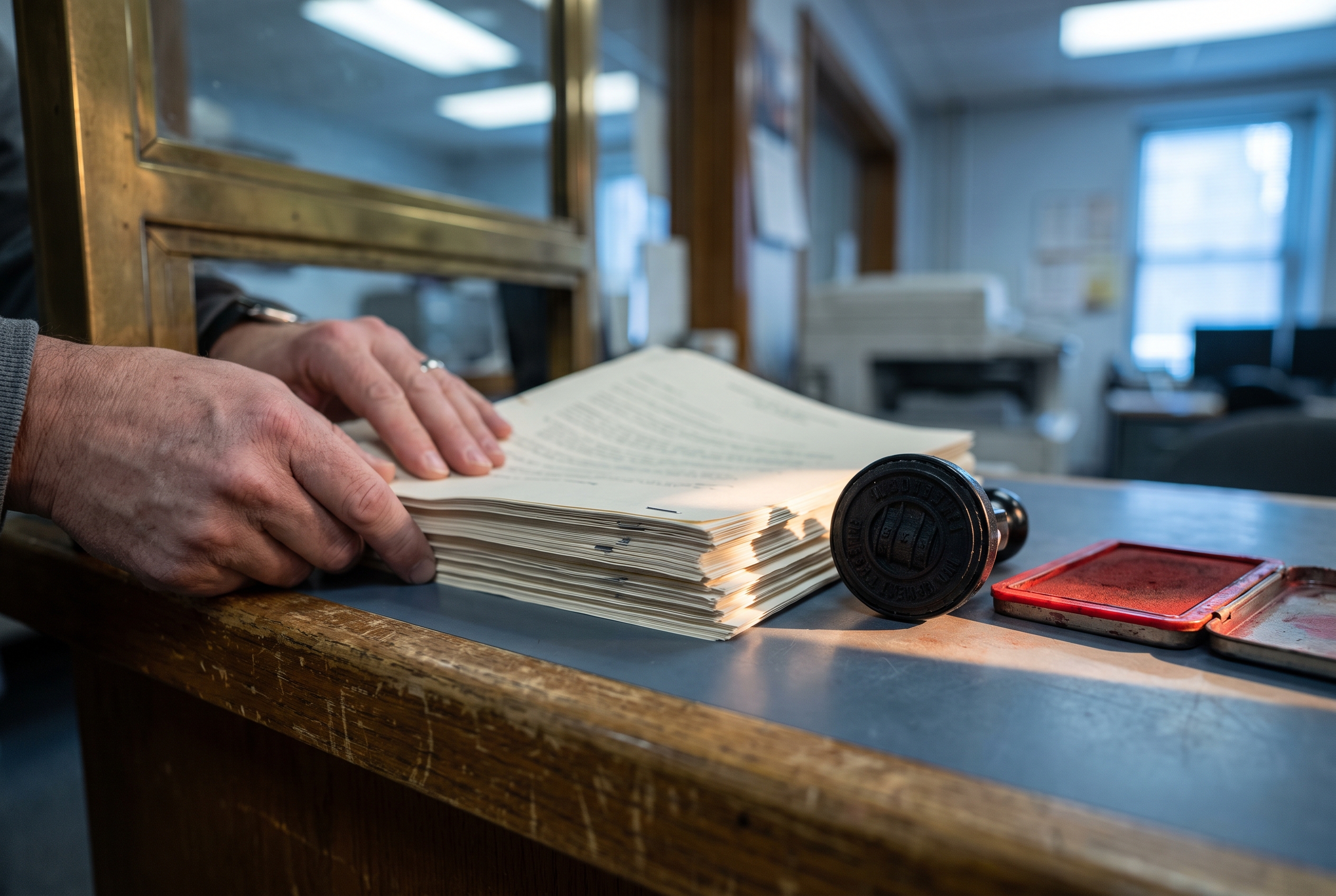
Give the county tax office your closing statement, with the tax-assignment wording, within 90 days of the due date. If the bill goes unpaid, the lien is filed in the January 1 owner's name unless the seller has done this.
-
Gwinnett: "When taxes go unpaid, the Jan. 1 owner is named on the tax lien; unless, within 90 days of the tax due date, the seller provides acceptable proof that the tax liability was transferred to the buyer." Gwinnett accepts closing-document language such as "Seller assigns liability for the payment of property taxes to the purchaser and purchaser accepts such assignment," together with a recorded deed in the buyer's name (Gwinnett Tax Commissioner).
-
Hall: Proof of transfer is due "within 90 days of the payment due date." Accepted wording: "Seller assigns the liability for the payment of property taxes to the Purchaser and Purchaser accepts such assignment" (Hall Tax Commissioner).
-
Coweta: The lien (called a FiFa) is recorded "in the January 1 owner's name unless the Tax Commissioner's Office has been presented with a contract (closing statement) within 90 days from the due date that proves the new owner is responsible." Coweta also says: "if you sell a piece of property and the taxes were pro rated at closing you must bring a copy of your closing statement to the Tax Commissioner's Office within 90 days from the due date" (Coweta Tax Commissioner).
Based on our own count of 90 days from each due date, the windows end around:
-
Gwinnett: about February 13, 2027
-
Coweta: about March 7, 2027
-
Hall: about March 15, 2027
The tax offices don't publish how they count those 90 days, so file well ahead of these dates. If the bill was paid in full at closing, sellers still benefit from keeping the closing statement on hand.
County by county: 2026 due dates and late charges
Gwinnett County
-
Due: November 15, 2026. "The 2026 property tax bills have been mailed and are due November 15" (Gwinnett Tax Commissioner).
-
Interest: "0.81% interest is added each month that a balance remains."
-
Penalties: "A 5% penalty is added on the remaining balance after 120 days, then an additional 5% on the remaining balance after every 120 days, not to exceed 20%."
-
Who gets bills: Both the January 1 owner and the new owner, when the home changed hands after January 1.
Coweta County
-
Due: Monday, December 7, 2026, according to the county's announcement. The tax office's own page says Coweta taxes are "Generally... due by December 1," so check the date on this year's bill and don't rely on memory.
-
Interest: "bank prime loan rate plus 3% to accrue monthly."
-
Penalties: "120 days after the due date, a penalty of 5% of the amount of tax due will be assessed and will be added every 120 days thereafter with a 20% cap" (Coweta Tax Commissioner).
-
Who gets bills: The January 1 owner of record, plus copies to the newest owner on the Assessors' records.
Hall County
-
Mailed and due: "Property tax bills mailed October 15. Payments are due December 15, giving taxpayers the full 60 days to pay" (Hall Tax Commissioner).
-
Later than usual: The Gainesville Times reported that Hall's bills are due Dec. 15 after a monthlong delay, and earlier reported that 2026 bills would be mailed later than "the traditional Sept. 15 date." If your contract assumed the bill would be out by early fall, ask your attorney whether that affects how your file is handled.
-
Interest: "prime rate plus 3% per annum. It is currently 0.8125% per month."
-
Penalty: 5% after 120 days of delinquency (Hall Property FAQ).
My lender escrows my taxes. Am I covered?
Not automatically. In all three counties, making sure the bill gets paid is the owner's job.

-
Gwinnett: "We do not send tax bills to mortgage companies. If your property taxes are in an escrow account, your property tax information is made available to your mortgage company; however, it is ultimately the property owner's responsibility to ensure taxes are paid."
-
Hall: "Tax statements are mailed to the homeowner, never to the mortgage company. It is the property owner's responsibility to forward the bill to the mortgage company if necessary."
-
Coweta: Owners with escrow should "forward a copy (or the top stub) of the bill to their mortgage company to ensure payment is made by the December 7 deadline. Late charges will begin accruing after that date."
This catches new buyers more than anyone. Your new loan may have just started its escrow account, and the 2026 bill may arrive in the seller's name or in yours. If you received a credit at closing to pay the bill, call your servicer and confirm whether it will pay the 2026 bill from escrow or whether you are expected to pay it yourself. Don't assume, and don't let both of you pay it.
The seller's homestead exemption is on this bill. What happens next year?
The buyer has to file their own homestead exemption, and for a fall 2026 purchase the first eligible year is 2027. According to the Georgia Department of Revenue, you must have owned the home and lived there as your legal residence "as of January 1 of the taxable year," and the application is due by April 1 (or up to 45 days after the assessment notice). Davis & Associates: "New owners must file for their own homestead exemption for the following tax year."
That means this year's bill, the one your proration is based on, reflects the seller's situation. Next year's bill may look different, so don't use the 2026 number as your long-term budget for taxes or escrow.
Checklist before the closing table
-
Ask your closing attorney now: Will the 2026 bill be paid in full at closing, or will the buyer get a credit and pay it later?
-
Find the tax line on the settlement statement. Make sure the credit runs the right direction and that the figure matches the actual 2026 bill if it has been issued.
-
Sellers: Keep a copy of the closing statement that includes the tax-assignment wording. If the bill isn't paid at closing, file it with the county tax office well before the 90-day window closes (about Feb. 13 in Gwinnett, Mar. 7 in Coweta, Mar. 15 in Hall).
-
Buyers: Put the due date on your calendar (Nov. 15, Dec. 7 or Dec. 15), watch for a bill in your name, and confirm with your servicer who is paying it.
-
Buyers: Make a note to file for the homestead exemption by April 1, 2027.
Due dates, penalty rates and accepted paperwork come from each county's tax commissioner. If a detail on your bill differs from what's here, the county's version controls, and your closing attorney is the right person to ask about your specific file.
Related reading
-
Metro Atlanta Has More Homes for Sale Than at Any Point in a Decade
-
How the Georgia Intangible Recording Tax Works on a Mortgage
Sources
-
Property Tax & Motor Vehicle Facts, Gwinnett County Tax Commissioner
-
Coweta County Tax Commissioner's Office Announces Mailing of 2026 Property Tax Bills, Coweta County
-
Coweta County Tax Commissioner's Office Announces Mailing of 2026 Property Tax Bills, The Citizen
-
Hall County property tax bills due Dec. 15 after monthlong delay, Gainesville Times
-
Hall County property tax bills delayed, tax commissioner says, Gainesville Times
-
This Tax Season: A Property Tax Guide for Georgia Homebuyers, Davis & Associates
-
Why You Got a Property Tax Bill After Closing in Georgia, Sherman & Phalen
-
Property Tax Homestead Exemptions, Georgia Department of Revenue