Why Buyers in Cherokee County Are Walking Away Over Builder's Warranties
Why Buyers in Cherokee County Are Walking Away Over Builder's Warranties If you've toured new construction in Cherokee County lately, you've probably noticed so
Why Buyers in Cherokee County Are Walking Away Over Builder's Warranties
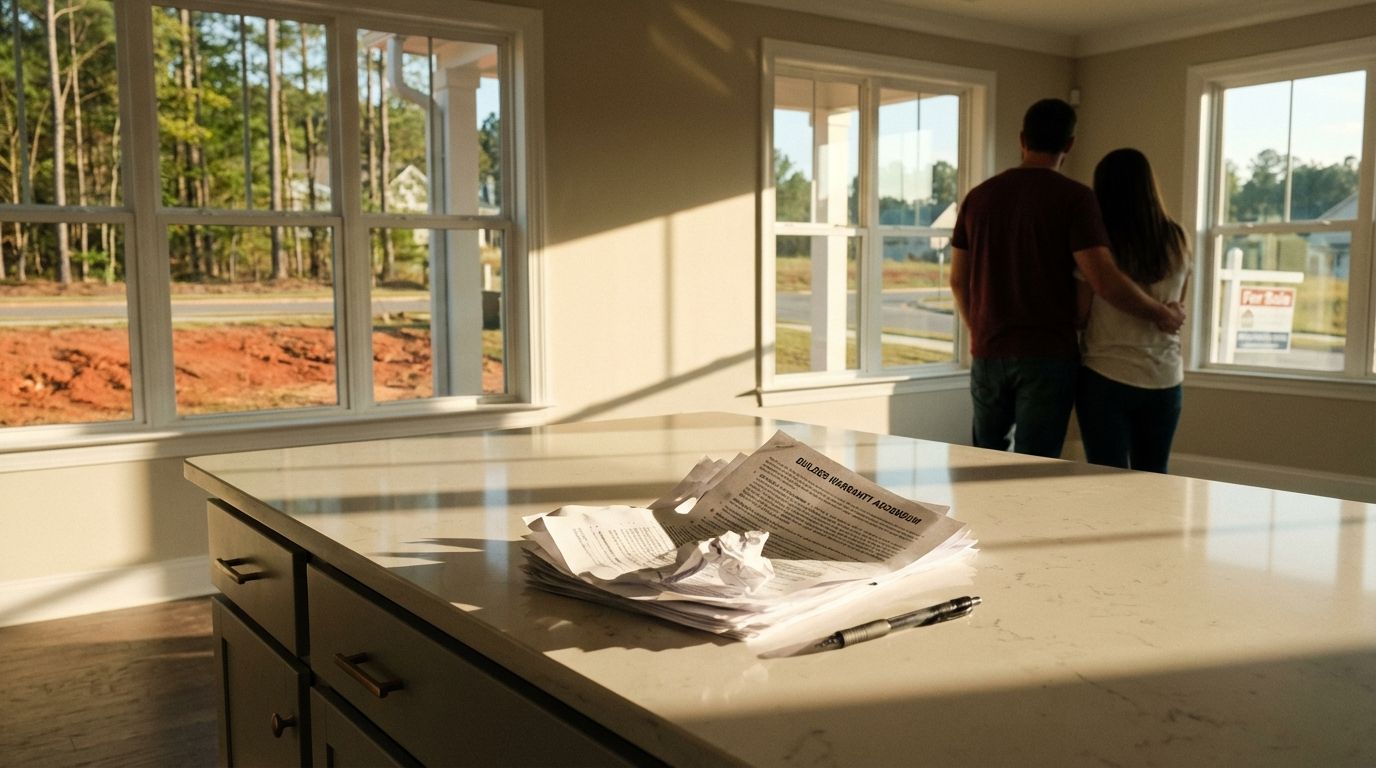
If you've toured new construction in Cherokee County lately, you've probably noticed something strange. The model looks great. The incentives look decent. The rate buydown gets your attention. Then the warranty packet shows up, and suddenly the deal feels a lot less clean.
That is happening more often than a lot of builders want to admit.
Cherokee County still has plenty going for it if you're shopping new construction. Canton, Holly Springs, Woodstock, and Ball Ground keep drawing buyers who want more house than they'd get closer to the Perimeter. Master-planned communities are still selling. Builders are still offering closing-cost help and mortgage incentives. And with today's national average 30-year fixed rate sitting around 6.29%, according to Mortgage News Daily's March 17 daily index, those incentives matter. On the same day, the 15-year average was about 5.93%. That's real money on a monthly payment, especially once you get north of $400,000.
But here is what a lot of buyers are figuring out too late: a builder's warranty is not the same thing as broad protection. Sometimes it is solid. Sometimes it is narrow, slow, and loaded with exclusions. And when buyers in Cherokee County realize what is actually covered, what is not, how long claims can drag, and how little leverage they may have after closing, some of them are backing out before they sign.
New construction still sounds safer than resale, until you read the fine print
Most buyers assume a brand-new house should come with fewer headaches than a resale home in Towne Lake or Bridgemill. Fair assumption. New roof, new systems, new framing, new appliances. No fifteen-year-old HVAC limping through another Georgia summer. No mystery water stain the seller painted over. No worn-out water heater hiding in a crawl space.
That part is true.
But the leap from "new" to "protected" is where deals start to wobble. A lot of builder warranties in Georgia follow some version of the 1-2-10 structure. One year for workmanship and materials. Two years for certain systems. Ten years for major structural defects, usually through a third-party warranty company. On paper, that sounds reassuring. In practice, it depends on definitions, deadlines, exclusions, and whether the defect you're worried about fits the warranty company's exact language.
And buyers are reading that language more carefully now.
What Cherokee County buyers are actually worried about
It usually starts with small stuff. Crooked trim. Nail pops. Doors that do not latch right. Uneven flooring. Caulk cracks around tubs. A window that drafts more than it should. Builders expect some of this, and to be fair, some punch-list cleanup is normal in any new build.
But buyers in Cherokee County are not just worried about cosmetics. They are worried about what happens when the issue is bigger than cosmetic but still somehow not "structural enough" for the long-term warranty to kick in.
That is where trust breaks down.
Say you buy in a fast-moving community off Sixes Road, near River Green, or out toward Holly Springs Parkway. Maybe the grading is off and water starts pooling near the foundation after heavy rain. Maybe an upstairs HVAC zone never balances correctly in July. Maybe the shower pan leaks into the ceiling below six months after closing. Maybe floor deflection feels off in the living room, but the warranty administrator says it is within tolerance. These are the situations that make buyers nervous, because they are expensive enough to matter and technical enough to become an argument.
The market gives buyers more reason to walk than it did two years ago
This is a big part of the story. Buyers walk away over warranties when they have enough leverage to do it.
At 3% mortgage rates, people overlooked things they would never accept now. They had to. Inventory was brutal. If you found a decent new construction home in Woodstock or Canton, you swallowed some risk and kept moving. That is not the environment today. Rates are higher. Payments are heavier. Buyers are more analytical. And builders, while still active, are not controlling every conversation the way they did at the peak frenzy.
That shift changes behavior. If a buyer is already looking at a payment that feels stretched, they are much less willing to accept vague warranty language, mandatory arbitration, delayed repair timelines, or a builder rep saying, "That is normal settling." The monthly payment is too high for blind trust.
And honestly, that is rational.
The biggest red flags in builder warranty packets
Some warranty documents are straightforward. Others are written in a way that makes everything sound covered until you hit the exclusions section. In Cherokee County deals, these are the clauses that tend to spook serious buyers.
Performance standards that favor the builder. If a crack, slope, gap, or deflection falls within the builder's written tolerance, the buyer may have no claim, even if the defect looks obvious in daily life.
Short reporting windows. Some workmanship issues need to be reported within a specific period, often tied to the first anniversary walkthrough. Miss that window and the argument gets harder.
Systems coverage that sounds broader than it is. Buyers hear "two-year systems warranty" and think full protection. Often it is narrower, focused on defined defects rather than every failure or performance complaint.
Structural coverage that is much narrower than buyers expect. The ten-year portion usually does not mean general peace of mind for ten years. It usually means major load-bearing failure, not minor cracking, water intrusion, flooring movement, or builder-grade shortcuts that make the house frustrating to live in.
Mandatory arbitration or limited remedies. This is a big one. If the purchase agreement forces disputes into arbitration and limits recovery, buyers may feel boxed in before they ever get the keys.
Builder control over the repair process. If the builder gets repeated chances to repair, and the repair standard is loosely defined, a bad experience can drag out for months.
Cherokee buyers are also comparing new construction against resale more carefully
That sounds backwards, because new construction should feel safer. But plenty of buyers are running the numbers and deciding an inspected resale in a mature neighborhood is less risky than a fresh build with a thin warranty packet.
In parts of Woodstock, Canton, and even older sections of Holly Springs, a resale home may come with known issues but also with proven drainage, mature landscaping, established HOA expectations, and no mystery about how the house behaves after a hard Georgia thunderstorm. A good inspection can tell you a lot. A warranty packet can tell you less than you think.
This is especially true for buyers relocating from other states. They come in assuming a builder warranty works like a bumper-to-bumper guarantee. Then they learn Georgia contracts can place a lot of burden on the buyer to document issues, follow procedure exactly, and accept limited remedies. That surprises people.
What the strong builders do differently
Not every builder is giving buyers a reason to run. The better operators in Cherokee County tend to do a few things that reduce friction right away.
They explain the warranty before contract, not after. They identify the third-party provider. They walk through what counts as structural, what counts as workmanship, and how claims are submitted. They spell out the post-closing service process. They do not act irritated when a buyer wants a real-estate attorney to review the paperwork. And they do not hide behind vague language when an issue comes up.
That transparency matters more than almost any design upgrade.
If a builder rep gets slippery when you ask direct questions about exclusions, response times, or whether water intrusion is treated as structural or maintenance, take that seriously. The short answer is that the sales office experience often previews the warranty experience.
What buyers should ask before going under contract
If you are looking at new construction in Cherokee County, ask for the full warranty sample and purchase agreement before you put down earnest money. Not the brochure version. The real documents.
Then ask these questions:
- Who backs the structural warranty, the builder directly or a third-party company?
- What is excluded from workmanship coverage in year one?
- How are drainage, grading, and water intrusion handled?
- What happens if an HVAC or plumbing issue shows up after closing but before the first annual walkthrough?
- Is arbitration mandatory?
- Can the buyer hire an independent inspector before closing and again around the 11-month mark?
- What are the exact reporting deadlines for defects?
And yes, talk to a Georgia real-estate attorney if anything looks one-sided. That is not overkill. That is basic risk management on a six-figure purchase.
The monthly payment makes warranty risk feel bigger
This is what ties the whole story together. At a 6.29% average 30-year rate, the principal and interest on a $400,000 loan is dramatically different from what buyers got used to in the cheap-money years. Add Cherokee County taxes, HOA dues, insurance, and the everyday cost of owning a house, and there is not much emotional room left for a post-closing fight over drainage, drywall cracks, or an HVAC issue the builder calls minor.
That is why buyers are walking. Not because they expect perfection. Because the payment is too high to accept uncertainty they do not understand.
In other words, the warranty packet has become part of affordability.
So, should a thin warranty scare you off?
Not automatically. Some buyers still come out ahead with new construction in Cherokee County, especially if the builder is reputable, the incentives are strong, and the home fits a long-term plan. A rate buydown, lower maintenance, and better energy efficiency can still make the numbers work.
But a weak warranty should absolutely slow you down.
Here is what that actually looks like: get the documents early, have them reviewed, inspect aggressively, and do not confuse a ten-year structural label with broad protection. If the builder cannot explain the coverage clearly, or if the repair process sounds like a maze, walking away may be the smartest move you make in the whole search.
Cherokee County still offers good options for buyers who want space, schools, and a little breathing room compared with closer-in Atlanta suburbs. But this market rewards buyers who read the contract, not just the marketing sheet. And right now, that is exactly why some deals are dying before they ever get to the closing table.
Want more Georgia mortgage and homebuying updates?
Get local guidance on rates, builder incentives, first-time buyer programs, and what to watch before you sign in Georgia.
Have Questions?
Our AI assistant Georgia can help you understand your options.