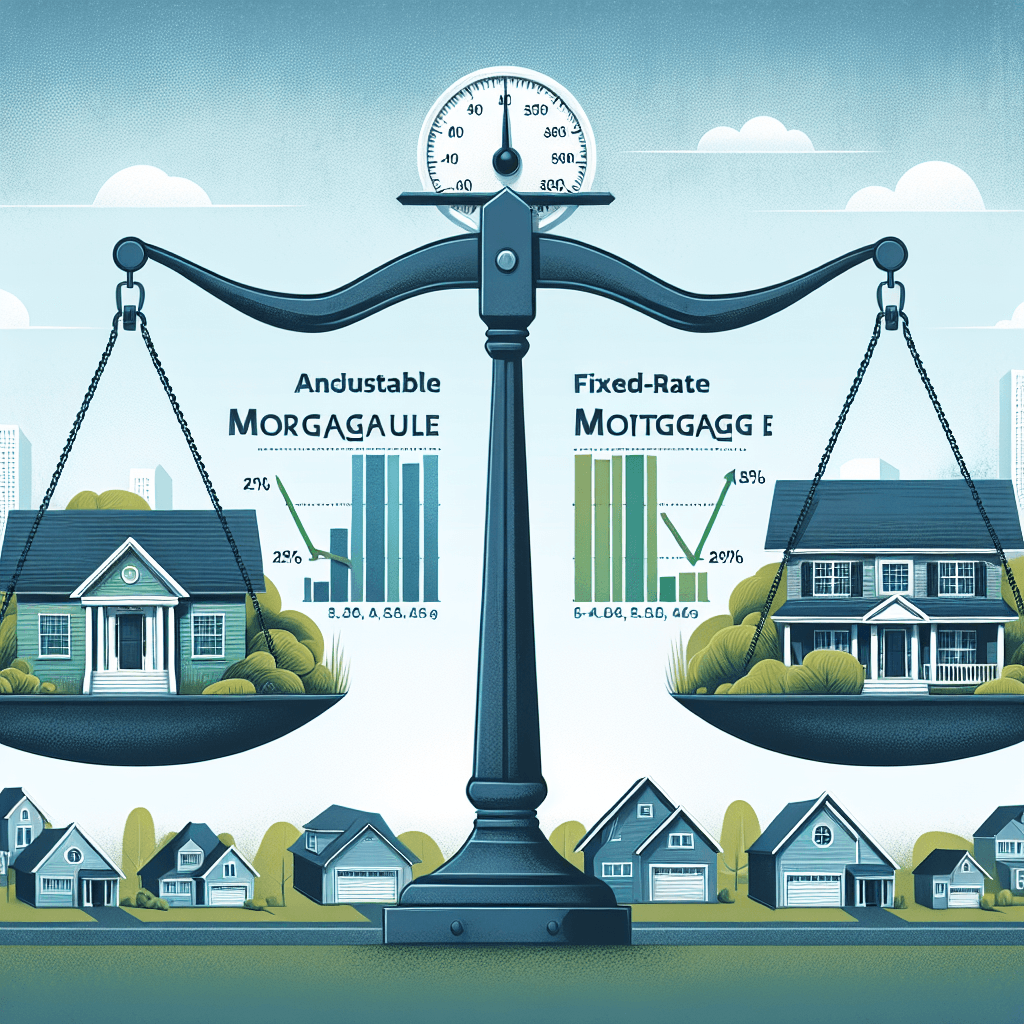
If you're financing a home purchase in Georgia right now, one of the biggest decisions you'll make is whether to choose a fixed-rate mortgage or an adjustable-rate mortgage (ARM). Both have legitimate advantages depending on your situation, and in 2026's interest rate environment, the ARM vs. fixed debate is more relevant than it's been in years.
This guide breaks down how each works, what the real numbers look like, and how to decide which is right for your Georgia home purchase.
What Is a Fixed-Rate Mortgage?
A fixed-rate mortgage locks in your interest rate for the entire loan term — typically 15 or 30 years. Your principal and interest payment never changes, no matter what happens to interest rates in the broader market.
Example: A 30-year fixed mortgage at 6.75% on a $350,000 Georgia home produces a principal and interest payment of approximately $2,270 per month. That payment stays the same in year 1 and year 29.
-
Why people choose fixed:
-
Complete payment predictability
-
Protection against rising rates
-
Simple to understand and plan around
-
Easier to budget long-term
Fixed-rate mortgages are the default choice for most American homebuyers, and there's a good reason for that: certainty has value, especially when you're making the largest financial commitment of your life.
What Is an Adjustable-Rate Mortgage (ARM)?
An adjustable-rate mortgage starts with a fixed rate for an initial period, then adjusts periodically based on a market index. The initial rate is typically lower than a comparable fixed rate, which is the core appeal.
Common ARM structures:
-
5/1 ARM: Fixed for 5 years, adjusts every 1 year after
-
7/1 ARM: Fixed for 7 years, adjusts every 1 year after
-
10/1 ARM: Fixed for 10 years, adjusts every 1 year after
-
5/6 ARM: Fixed for 5 years, adjusts every 6 months after
The first number is the initial fixed period (in years). The second number is the adjustment frequency after that period.
The adjustment mechanism: After the initial period, your rate adjusts based on a benchmark index (currently the SOFR — Secured Overnight Financing Rate) plus a fixed margin set by your lender. If the index rises, your rate goes up. If it falls, your rate goes down.
ARM Caps: Your Protection Against Rate Shock
This is the most important thing to understand about ARMs: caps limit how much your rate can change.
Every ARM has three caps:
- Initial adjustment cap: Maximum rate increase at the first adjustment (typically 2% above starting rate) 2. Periodic cap: Maximum increase at each subsequent adjustment (typically 1-2%) 3. Lifetime cap: Maximum total increase over the life of the loan (typically 5-6%)
-
Example: A 7/1 ARM at 6.0% with 2/1/5 caps means:
-
First adjustment: Rate cannot go above 8.0% (6.0 + 2.0)
-
Each year after: Rate cannot rise more than 1.0%
-
Over the life of the loan: Rate cannot exceed 11.0%
These caps mean your worst-case scenario is defined — not unlimited. Understanding your caps is essential before choosing an ARM.
ARM vs. Fixed Rate Comparison in Georgia: February 2026
Here's what rates actually look like in Georgia right now:
| Loan Type | Approximate Rate (Feb 2026) | | --- | --- | | 30-Year Fixed | 6.75% – 7.00% | | 15-Year Fixed | 6.00% – 6.25% | | 7/1 ARM | 5.875% – 6.25% | | 5/1 ARM | 5.50% – 5.875% |
Payment comparison on a $350,000 loan:
| Loan Type | Rate | Monthly P&I | 7-Year Cost | | --- | --- | --- | --- | | 30-Year Fixed | 6.875% | $2,299 | $192,516 | | 7/1 ARM | 6.0% | $2,098 | $175,812 (7-yr fixed period) | | Savings with ARM (7-yr period) | | $201/mo | ~$16,700 total |
The savings are real — if rates don't rise significantly after the ARM adjusts.
When an ARM Makes Sense for Georgia Buyers
-
Short time horizon. If you're confident you'll sell or refinance within the ARM's initial fixed period, the ARM's lower rate is pure savings with no risk. Georgia buyers in this situation include:
-
Job relocations (you know you'll move in 3-5 years)
-
Buyers purchasing a "starter home" they plan to sell as family grows
-
Remote workers with geographic flexibility
You expect to refinance. Many buyers choose an ARM with the explicit plan to refinance before the initial period ends. If rates drop over the next few years (which many economists expect), you refinance into a lower fixed rate anyway. Learn more about refinancing your mortgage in Georgia for timing strategies.
The rate differential is significant. If ARM rates are 0.75–1.5% below fixed rates (as they currently are in Georgia), the monthly savings add up quickly. On a $400,000 loan, a 1% rate difference is about $260/month — real money.
You're buying a more expensive home. Higher-priced Georgia homes in Atlanta or the northern suburbs often involve jumbo loan territory. ARMs are popular for jumbo loans in Georgia because the dollar savings on a larger balance are more substantial.
Income is likely to grow. Younger buyers early in careers may know their income will increase. If your rate adjusts upward in 7 years but your income has also increased significantly, the higher payment may be manageable.
When a Fixed Rate Is the Better Choice
You're buying your forever home. If you're planning to stay for 20+ years, the certainty of a fixed rate wins. The ARM's initial savings won't outweigh a potential rate spike in year 8 or year 12.
You're on a tight budget. If your budget is stretched at the current payment, you cannot afford the risk of a higher payment after adjustment. ARMs are not the right tool for buyers at the edge of their affordability.
Rates might rise. If you believe rates will increase over the next 5-10 years, locking in now at a fixed rate protects you. No one knows for certain where rates will be.
Peace of mind matters. Some buyers simply prefer knowing exactly what their payment will be. There's no right or wrong here — reducing financial stress has real value.
You don't plan to refinance. If you're not a "refinancing type" and tend to set and forget, a fixed rate requires zero monitoring. An ARM requires you to pay attention as your adjustment date approaches.
The Refinancing Safety Net
One reason many financial advisors are more comfortable recommending ARMs in 2026 than in previous years: refinancing has become more accessible, and if rates continue their gradual downward trajectory, many ARM borrowers may be able to refinance into a favorable fixed rate before their first adjustment.
-
That said, refinancing is not guaranteed. It requires:
-
Your home value to be sufficient (enough equity)
-
Your income and credit to still qualify
-
Rates to be favorable at that time
Treat refinancing as a plan, not a certainty. Lock in rates when they're at your target — don't wait for the perfect moment. Our guide to mortgage rate locks in Georgia explains how rate locks work and when to use them.
ARM Myths vs. Reality
Myth: ARMs always explode after adjustment. Reality: The 2008 crisis involved poorly structured ARMs with minimal caps. Today's ARMs have robust consumer protections. Your maximum rate change is capped and disclosed upfront.
Myth: ARMs are only for risky borrowers. Reality: Many sophisticated buyers use ARMs strategically to reduce costs over a known time horizon. ARM usage increases when the rate differential widens.
Myth: You can't refinance out of an ARM. Reality: You can refinance an ARM into a fixed rate at any time (subject to prepayment penalty if applicable, though these are rare in modern ARMs). The ARM is not a trap.
Myth: The rate always goes up after adjustment. Reality: If the benchmark index falls, your rate can go down at adjustment. In 2020-2021, many ARM borrowers saw their rates drop significantly.
The Math That Really Matters
The right question isn't "ARM vs. fixed." It's: "What's my break-even point?"
Calculate how long it takes for the ARM's savings to disappear if rates rise to their caps:
-
On a $350,000 loan:
-
ARM savings in initial period: ~$200/month vs. 30-year fixed
-
Total savings over 7-year ARM period: ~$16,800
-
If ARM adjusts to worst-case cap (11%): payment increases to ~$3,100/month vs $2,299 fixed = $800/month more
-
At $800/month extra: You'd burn through your $16,800 savings in about 21 months
So with a 7/1 ARM in this scenario: if you stay in the home and rates hit the absolute worst case, you'd still come out ahead through roughly year 9. Beyond that, you're paying more than you would have with a fixed rate.
Running your personal break-even analysis — accounting for your likely time in the home, realistic rate scenarios, and refinancing possibilities — is the most important step before choosing.
ARM vs. Fixed for Georgia's Different Markets
Atlanta metro buyers purchasing in the $400,000-$700,000 range often have the financial sophistication and income growth trajectory that makes ARMs attractive. The larger loan balance amplifies the monthly savings.
North Georgia mountain or lake buyers who use these as second homes or eventually retire there may want fixed rates — they're keeping these homes for decades.
Coastal Georgia buyers (Savannah, Brunswick) in a more seasonal market often hold properties medium-term, where a 7/1 or 10/1 ARM aligns with their ownership timeline.
First-time buyers with tight budgets should generally lean toward fixed rates for predictability, even if an ARM could lower their initial payment.
How to Decide: Questions to Ask Yourself
- How long will I realistically live in this home? If < 7 years, lean ARM. If 15+ years, lean fixed. 2. Can I afford a higher payment if rates rise? If no, fixed is safer. 3. What's my actual rate differential? If ARM is only 0.25% below fixed, it's not worth the risk. 4. Do I have the discipline to monitor and refinance if needed? Arms require attention. 5. What's my financial trajectory? Increasing income makes ARMs more manageable.
Before finalizing your choice, talk to an experienced Georgia mortgage lender who can run the numbers specific to your loan size, target property, and timeline. The right answer is almost always personal, not universal.
In 2026's Georgia market — with rates in the 6.5-7.0% range and economic uncertainty influencing where rates go next — both fixed and ARM products are legitimate choices. The best one is the one that fits your actual life, not just the headlines.