What the New 6.35% Rate Spike Actually Means for a $400K Home Purchase in Cobb County
What the New 6.35% Rate Spike Actually Means for a $400K Home Purchase in Cobb County Rates moved again. If you've been watching the mortgage market over the pa
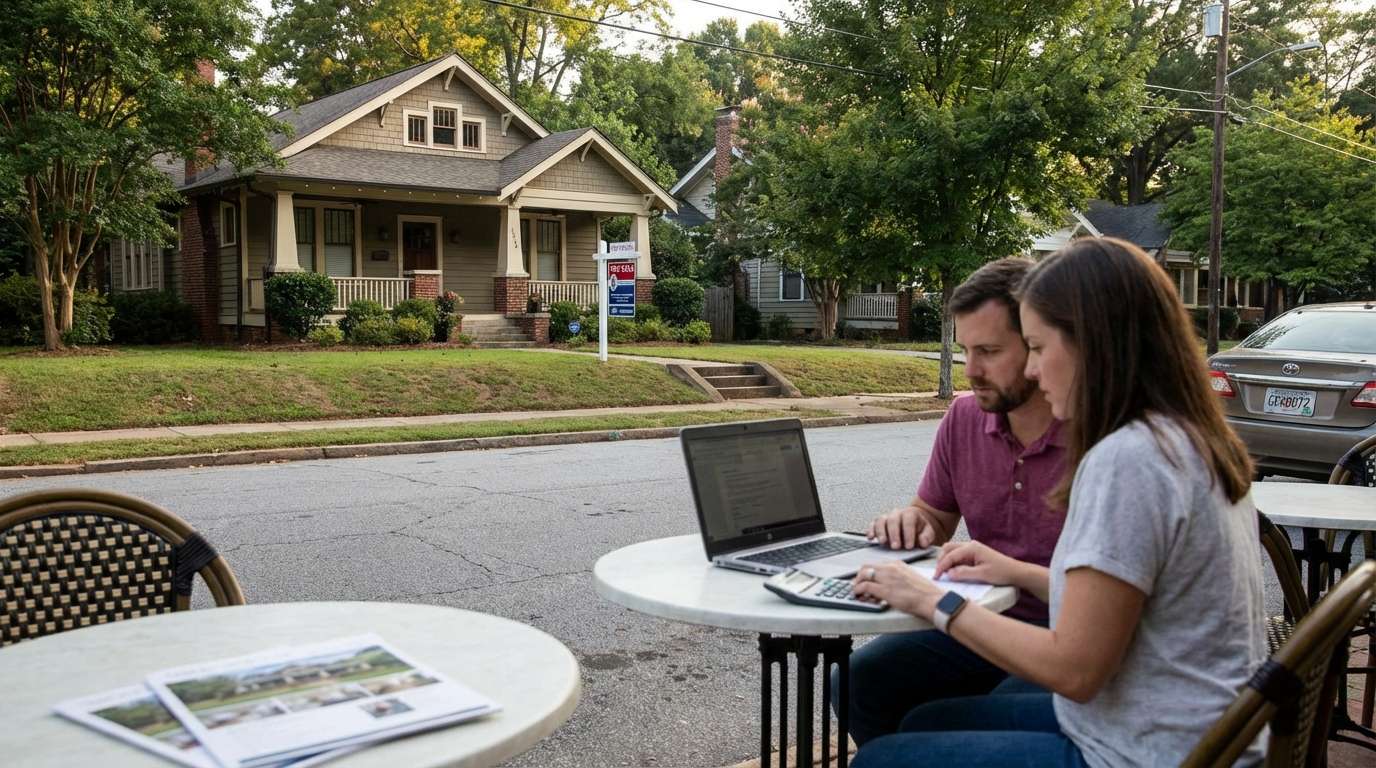
What the New 6.35% Rate Spike Actually Means for a $400K Home Purchase in Cobb County
Rates moved again. If you've been watching the mortgage market over the past few weeks, you already know — the 30-year fixed climbed back to 6.35%, and that number is sitting heavy with a lot of buyers who were quietly hoping we'd see something closer to 6% by spring. In Cobb County, where a decent 3-bedroom in Smyrna or Kennesaw can run anywhere from $380,000 to $450,000 depending on the neighborhood and the week, that rate change isn't abstract. It's a real number that hits your payment every single month.
So what does it actually look like on a $400,000 purchase? And more importantly — does it change what you should do right now, in March 2026, if Cobb County is where you're trying to land?
That's what we're going to work through here.
The Real Dollar Difference: 6.35% vs. Where Buyers Hoped We'd Be
Start with the math, because this is where people's intuitions about rate moves tend to go sideways. A lot of buyers assume a quarter-point bump in rates is a minor inconvenience. On a $400K home, it's not minor.
At 6.35% on a 30-year fixed with a conventional loan, 20% down — so you're financing $320,000 — your principal and interest payment comes out to roughly $1,994 per month. Now run the same numbers at 6.10%, where rates were sitting earlier this year before this latest move: that payment drops to about $1,941. The difference is $53 a month, which most people hear and think, okay, that's manageable. Fine.
But stretch that $53 across 360 payments. That's $19,080 over the life of the loan. That's a car. That's two years of groceries. That's real money, and it's worth acknowledging before you shrug it off.
Now add in what Cobb County buyers are actually paying on top of their mortgage. Property taxes in Cobb run around 0.86% of assessed value annually — lower than Fulton, meaningfully lower than Gwinnett — but on a $400K purchase, you're still looking at roughly $286 a month in taxes, depending on how your home assesses and whether you've filed for the homestead exemption (which you absolutely should do if this will be your primary residence — it trims your tax bill and you have until April 1st to file for the current tax year). Add homeowners insurance — figure $150 to $180 a month for a standard policy in this price range — and if you're putting down less than 20%, private mortgage insurance on top of that.
The all-in payment on a $400K Cobb County home right now, assuming 20% down and no PMI, is landing somewhere between $2,430 and $2,460 per month once you factor in taxes and insurance. If you're at 10% down, that number climbs above $2,600 with PMI included.
That's the real number. Not 6.35%. $2,460. That's what you need to be able to afford.
What Cobb County Inventory Looks Like Right Now
Here's where the rate conversation intersects with reality on the ground. A lot of buyers hear rates go up and immediately think about pausing — waiting for conditions to improve. That instinct makes sense, but in Cobb County right now, waiting has a cost that doesn't show up on a mortgage calculator.
Inventory in Cobb has been stubbornly tight through the first quarter of 2026. The areas that buyers want most — East Cobb's school districts around Walton and Pope high schools, the walkable pockets of Smyrna near Cumberland, and the quickly appreciating stretch of Marietta around Kennesaw Mountain — are running thin on available homes at the $375,000 to $425,000 price point. Properties in good condition with good schools are still going under contract in under two weeks. Multiple offers on clean listings are still happening, especially in East Cobb where the school district alone drives demand year-round.
What that means practically: even if you sit out a few months waiting for rates to soften, the prices you're waiting to buy at are not sitting still. Cobb County median prices have been trending upward — median home values in the county have risen meaningfully over the past year, and the spring buying season, which kicks into gear in March and runs hot through June, historically applies more pressure on that number, not less.
The bet you're making by waiting is essentially this: "I think rates will drop by more than prices will rise." In Cobb County, that's a bet that hasn't paid off for most buyers over the past three years. That doesn't mean it won't this time. But go in clear-eyed about what you're wagering.
How 6.35% Affects Your Purchase Power — And Why That Matters More Than the Rate Itself
Here's something most buyers don't think about until their lender walks them through it: when rates go up, your approved loan amount goes down, assuming your income stays the same.
Lenders use debt-to-income ratios — the standard benchmark is keeping your total housing payment at or below 43% to 45% of your gross monthly income for most conventional loans, though some programs push that ceiling a bit higher. If you make $9,000 a month gross and you're targeting a 43% DTI, your max housing payment is about $3,870. That sounds comfortable at $400K. But if your student loans or car payment eat into that DTI ceiling, the qualifying loan amount shrinks fast.
At 6.10%, a buyer qualifying for a $1,950 monthly principal and interest payment can finance about $327,000. At 6.35%, that same $1,950 payment supports closer to $318,000. On a $400K purchase, that $9,000 gap in what you can borrow means you'd need to bring roughly $9,000 more to closing — or renegotiate your price — just because of a quarter-point rate move.
This is why locking in your rate at the right moment matters. Talk to your lender about a float-down option if one's available. And if you're pre-approved at a rate that's already been locked, find out exactly when that lock expires — a lot of buyers in competitive markets have watched their locks expire during a long negotiation and gotten re-priced at a worse rate right before closing.
The Case for Buying in Cobb Right Now Anyway
Honestly? The case is still pretty solid for the right buyer. Here's why.
Cobb County delivers something that's hard to find in the Atlanta metro at this price point: relatively low property taxes, a school district that parents move specifically to access, and genuine neighborhood variety. You can buy in Vinings if you want walkability and a shorter commute to Buckhead — though you'll pay for it, $400K gets you a lot less square footage there. You can buy in west Marietta near the Marietta Square and get a renovated bungalow in a neighborhood that's been quietly appreciating for seven or eight years. You can go to Acworth and get a newer build with more room for the same money, accepting a longer drive down I-75.
The county's job base is legitimate. Dobbins Air Reserve Base, the Cumberland corridor with its commercial density, Kennestone Hospital — Cobb has employment anchors that keep demand for housing stable even when broader economic conditions wobble. That's not true of every county in metro Atlanta.
And compared to where Fulton County buyers are operating right now — where a comparable home in Sandy Springs or Brookhaven runs $100,000 to $150,000 more and property taxes are noticeably higher — Cobb County at $400K with a 6.35% rate still represents genuine value. The relative math doesn't disappear just because the rate went up.
What First-Time Buyers Specifically Should Know Before Closing in Cobb
If this is your first purchase, a few things specific to Georgia and Cobb County that your lender may or may not have brought up yet.
The Georgia Dream program through the Department of Community Affairs is still active in 2026 and still underused. It offers down payment assistance up to $10,000 for qualifying first-time buyers — and up to $12,500 if you're a public protector, educator, or healthcare worker. There are income limits tied to household size and area median income for Cobb County specifically, and the home price needs to fall within program limits, but a $400K purchase in Cobb County can potentially qualify depending on the specifics. Ask your lender directly. If they look at you blankly, find a lender who's certified with the Georgia Dream program — not every lender participates, and the ones who do this regularly are usually faster and cleaner on the back end.
Closing costs in Georgia typically run 2% to 3% of the loan amount. On a $320,000 loan, that's $6,400 to $9,600 in closing costs — title fees, lender fees, prepaid interest, escrow setup. Sellers in Cobb County will sometimes agree to contribute to closing costs, especially if a home has been sitting for a few weeks and you're coming in with a clean offer. It's worth asking your agent about, particularly on listings that have had a price reduction or been on market longer than 30 days.
Georgia's property tax homestead exemption is not automatic. You have to file. Cobb County's deadline is April 1st, and if you close before then and this is your primary residence, you want to get that application in — the savings are real and the process is straightforward at the Cobb County Tax Commissioner's office on Whitlock Avenue in Marietta.
The Rate Waiting Game and What History Says
A lot of buyers are asking some version of the same question: should I wait for rates to come back down before I commit?
The short answer is that nobody knows when or whether rates will drop meaningfully from 6.35%. The Federal Reserve's posture in early 2026 hasn't been friendly to the rate-drop predictions that were circulating late last year. Inflation has stayed stickier than forecasters expected. And mortgage rates don't move in lockstep with Fed decisions anyway — they track the 10-year Treasury yield more closely, and that's been driven by factors nobody has a clean read on right now.
What I'd tell a buyer sitting on the fence in Cobb County is this: if the payment works for your budget at 6.35%, and the home meets your actual needs, the rate environment is not a reason to stay out. If the payment doesn't work, that's a different conversation — and a more important one. Don't stretch to a home that only works at 6.10% and hope rates rescue you. That's a bad plan.
But if you can genuinely afford the all-in payment at 6.35%, you can always refinance if rates drop. You cannot buy the same house for the same price a year from now if prices in Cobb County continue moving the way they've been moving. The old line about "marry the house, date the rate" is a little overused at this point, but it's not wrong.
Before You Make Any Moves
Get a real pre-approval — not a pre-qualification, which is just someone checking your credit score and taking your word for your income. An actual pre-approval with verified income, assets, and a credit pull gives you credibility when you make an offer in Cobb County's competitive segments. Sellers and listing agents notice the difference, and in a market where multiple offers are still common on good properties, showing up with a verified pre-approval matters.
Find a lender who works Cobb County regularly and knows the Georgia Dream program if that's relevant to your situation. Rates from local lenders and credit unions worth comparing against the big national platforms — sometimes significantly. The difference between a 6.35% rate and a 6.20% rate from a local lender who knows how to close Georgia transactions cleanly can save you real money and real headaches.
And talk to an agent who actually knows the difference between the east and west sides of Cobb, because they are genuinely different markets with different price dynamics, different commute realities, and different school districts. The county is bigger than it looks on a map.
The rate moved. That's real. But $400K in Cobb County, if the numbers work for your situation, is still a purchase worth making.
Want rate updates and Cobb County market data delivered directly to your inbox? Sign up for the MortgageInGeorgia newsletter — no noise, just numbers and local context when things move.
Have Questions?
Our AI assistant Georgia can help you understand your options.