
FHA minimum property requirements are the property standards a home must meet to qualify for an FHA-insured mortgage. On Sept. 22, 2026, FHA posted a draft rewrite of those standards and is taking feedback through Nov. 6, 2026. It is a proposal only, with no effective date announced, so today's rules still apply to every Georgia FHA contract.
Suppose you're an FHA buyer looking at a 1960s ranch in Macon or an older bungalow in Columbus. You may have heard that FHA is "loosening" its property rules. It has proposed to. But the appraisal on the house you put under contract this month will follow the current standards, and on a house built before 1978, a separate federal lead-paint rule applies no matter what happens to the draft. This article covers what FHA posted, what would change, and what to ask before you write an offer.
What FHA posted and when
On Sept. 22, 2026, FHA issued FHA INFO 2026-22, titled "FHA Seeks Feedback on Proposed Changes to Single Family Housing Minimum Property Requirements." It posted proposed updates to the property standards in Single Family Housing Policy Handbook 4000.1, the main rulebook for FHA lenders, on the FHA Single Family Drafting Table.
HUD posted three documents: a Summary of Proposed Policy Changes, a Clean Version with line numbers, and a Redline that shows tracked changes. Feedback is due Nov. 6, 2026.
FHA's reason for the rewrite, as quoted by HousingWire: "FHA's MPRs have long supported the safety and soundness of single-family homes FHA insures. However, these standards have not been updated in over two decades and no longer reflect current industry practices."
According to HECMWorld, the changes would apply to both regular (forward) FHA mortgages and FHA reverse mortgages (HECMs).
Status check: this is a proposal
HousingWire reports that FHA will review all feedback before it publishes a final update to Handbook 4000.1. The Money Overview reports that no effective date has been announced and that the current standards stay in effect until the changes are final.
In practice, if you sign a purchase contract on an FHA loan in Georgia this fall, plan for the current property standards. Nothing in the draft changes your appraisal today.
What the draft would change
We could not review the draft handbook's exact wording, so the details below come from trade-press reporting. National Mortgage News (Bonnie Sinnock, Sept. 22, 2026) reported the main proposed changes:
-
Condition and quality ratings. FHA would use the same condition and quality ratings as Fannie Mae and Freddie Mac. NMN: "On the enterprises' scale of C1 to C6 for the property's condition, FHA's minimum would be C4." A C4 property can show "moderate, normal wear and tear" but cannot need anything beyond cosmetic or mechanical component repairs. The minimum construction-quality rating would be Q5, an "as is" assessment that "allows for use of less costly materials, simpler designs and basic compliance with building codes."
-
Appraisal data standard. FHA appraisals would formally have to meet Uniform Appraisal Dataset (UAD) 3.6 requirements. NMN reports those become mandatory Nov. 2 for new Fannie Mae and Freddie Mac valuations.
-
Utilities. "Mechanical utilities would no longer have to be turned on and operated during an appraisal."
-
Crawl spaces, attics and appliances. "Appraisers also would no longer have to specifically inspect kitchen appliances or visit crawl spaces and attics."
-
Exterior paint. "Rules for paint also would be eased, with specific repair requirements related to the home's exterior removed so long as the property meets GSE standards."
-
Lead-based paint. "In cases where there is lead-based paint, repairs could be contained to the primary residence rather than the whole property, allowing for the removal of other structures."
-
Wells and public water and sewer. "Wells would no longer have to meet minimum distances from sources of pollution on existing properties." The draft would also drop the requirement that lenders make sure public water and sewer connections exist "whenever feasible at a reasonable cost."
-
Manufactured homes. The specific installation and certification requirements would go away. FHA would rely on HUD model standards plus certification of any structural modifications.
The Money Overview reports several more items. The draft would fold the separate roof-covering requirement into the condition ratings, drop the standalone heating and cooling guidance, end FHA's Planned Unit Development (PUD) approval requirement, and require a connection to public water only when it is available and the local authority mandates it.
Why older Georgia homes are the story
Most of these changes affect older houses more than new ones. Think of peeling exterior paint, a detached garage or shed, a crawl space under a mid-century ranch, or a well on a rural lot. Those are the kinds of items the draft would ease.
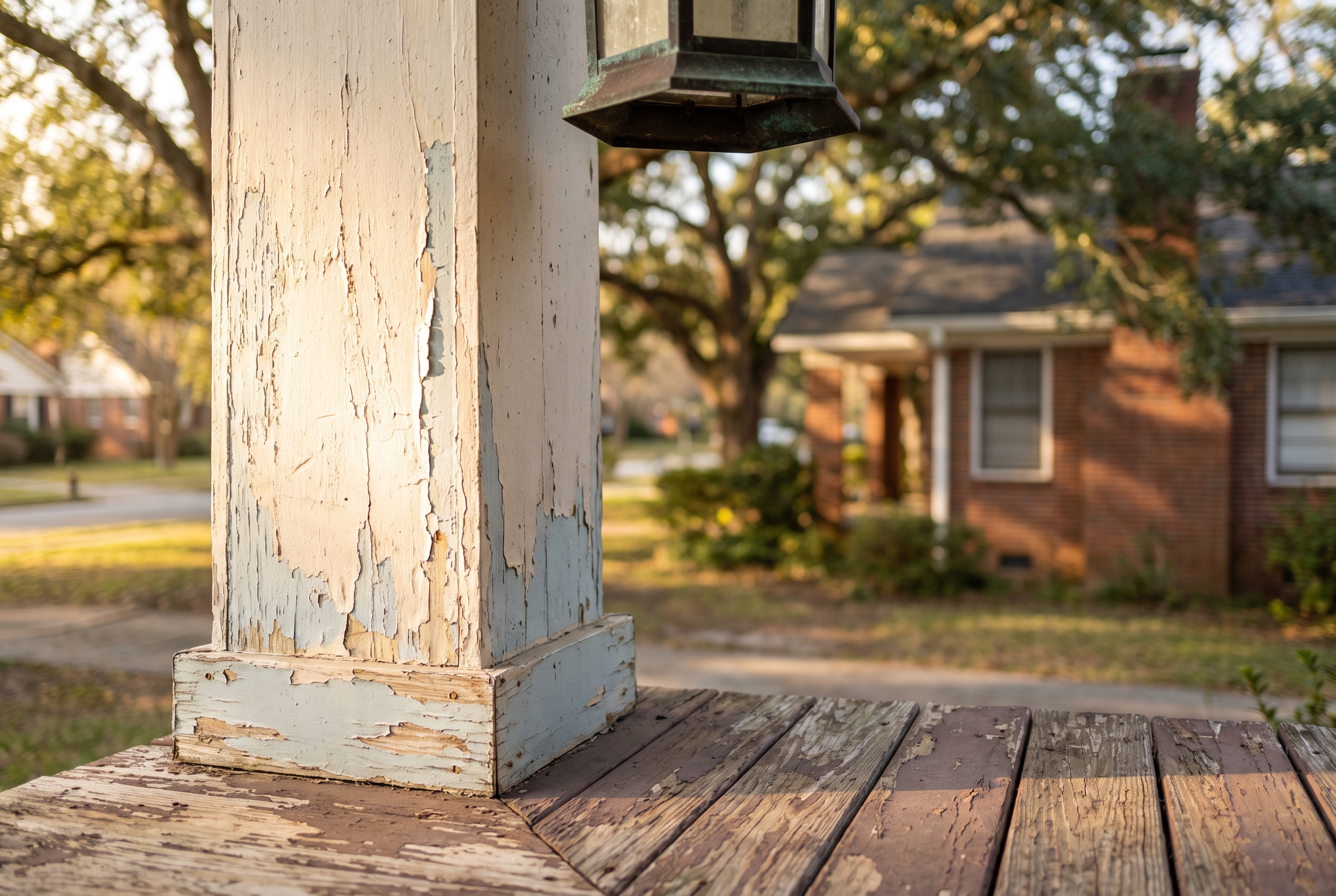
For a house built before 1978, a separate rule also applies. Federal regulation 24 CFR 200.810 covers one- to four-family homes built before 1978 that are being considered for FHA mortgage insurance. It is not part of the handbook the draft revises, and it is not part of this proposal. Under the regulation:
-
"The appraiser shall, when appraising a dwelling constructed prior to 1978, inspect the dwelling for defective paint surfaces."
-
Defective paint has to be treated by covering or removing it. "Machine sanding and use of propane or gasoline torches (open-flame methods) are not permitted."
-
"In the case of defective paint spots, scraping and repainting the defective area is considered adequate treatment."
-
Treatment is not required if an EPA-certified lead-based paint inspector finds the surface is not lead-based paint.
So even if the draft becomes final, a pre-1978 Macon or Columbus home will still get a defective-paint inspection under the federal regulation. What the draft could change is the handbook detail around that inspection, for example whether lead-paint repairs could be limited to the main house.
What doesn't change yet
The National Association of Realtors reported that repairs flagged in an appraisal typically must be finished before closing. HUD's earlier request for information, which closed June 29, 2026, asked whether some repairs could be handled after closing. That idea is part of the review, not current practice.
Seller reluctance is the problem the industry has been pressing. HousingWire reports that the Mortgage Bankers Association, the Broker Action Coalition and Community Home Lenders of America argued that FHA's repair and reinspection requirements go beyond Fannie and Freddie standards, which makes sellers reluctant to accept FHA offers. The ABA Banking Journal reports that the American Bankers Association had also urged alignment with Fannie Mae and Freddie Mac, and that HUD's review followed President Trump's March executive order on expanding access to mortgage credit.
NAR's Shannon McGahn, executive vice president and chief advocacy officer, put it this way: "Modernizing outdated requirements could help reduce unnecessary delays, lower transaction costs and ensure qualified buyers are not disadvantaged in a competitive market." That may prove true once the rules are final. For now, a seller weighing your FHA offer against a conventional one is weighing today's rules.
Questions to ask your agent before you write an offer
-
Was the house built before 1978? If so, expect the appraiser to inspect for defective paint under 24 CFR 200.810.
-
Is paint peeling or chipping anywhere? Check the house itself, then ask whether a detached garage, shed or fence could draw attention during the appraisal.
-
Will the utilities be on for the appraisal? The draft would drop the requirement to turn them on and operate them, but it is not in effect. On a vacant or estate property, confirm the power, water and gas will be on.
-
Can the seller handle scraping and repainting before closing? Under the regulation, spot scraping and repainting counts as adequate treatment for defective paint spots. Machine sanding and open-flame torches are not allowed.
-
Who pays for FHA-required repairs? Ask your agent how the contract should handle repairs the appraiser flags, including a cap and what happens if the seller won't do them.
Questions to ask the appraiser or loan officer
-
Which condition items typically trigger FHA repair conditions today in homes like the one you're buying?
-
How is crawl-space and attic access handled under current practice? Does the seller need to clear or open anything?
-
If paint is flagged, could a certified lead-based paint inspection take the place of treatment? The 200.810 exception applies when an EPA-certified inspector finds the surface is not lead-based paint.
-
How long does a reinspection usually take after repairs, and how does that fit your closing date?
A note for rural Georgia buyers with wells
If you're looking at acreage outside Macon or Columbus, or anywhere a well and septic system are the norm, note that the draft would drop minimum well distances from pollution sources on existing properties. It would also ease the public water and sewer connection rules. The Money Overview describes the new standard as requiring public water only when it is available and the local authority mandates it. None of that is in effect. Ask your loan officer what the current FHA rules require for the well and septic on the property you're considering.

How to weigh in
Anyone can comment. HUD's Single Family Policy Drafts page explains the process: fill out the Feedback Response Worksheet, cite page and line numbers from the Clean Version, and email it to FHA by Nov. 6, 2026. According to The Money Overview, HUD's earlier request for information drew 69 public comments.
Bottom line
The draft could make some older Georgia homes easier to buy with FHA financing, especially houses with worn exterior paint, outbuildings, crawl spaces or wells. It is still a draft. Don't write an offer that counts on the proposed rules. Plan for current FHA repair conditions, budget time for repairs before closing, and on any pre-1978 house, assume the federal defective-paint inspection will happen.
Related reading
-
What Can Georgia's Insurance Commissioner Do About Your Premium?
-
Can Georgia FHA Borrowers Qualify With VantageScore 4.0 Yet?
Sources
-
HUD: FHA INFO Messages, Single Family Housing Industry News (FHA INFO 2026-22)
-
National Mortgage News: Lenders should prep for possible loosening of some FHA rules
-
HousingWire: Feedback still open for FHA minimum property requirements
-
ABA Banking Journal: FHA proposes changes to single-family housing minimum property requirements
-
NAR: HUD Opens Review of Minimum Property Requirements for FHA Mortgages