The April 2026 Consumer Price Index landed at 8:30 a.m. on May 12 at +0.6% month-over-month and +3.8% year-over-year — the highest annual headline reading since May 2023. Core CPI re-accelerated to 0.4% MoM and 2.8% YoY, up from March's 0.2%/2.6% (CNBC; CNN Business).
The cleanest story is that this is an Iran-war energy passthrough: the CPI energy index rose 3.8% in April alone and accounted for more than 40% of the monthly all-items increase, with energy up 17.9% YoY, gasoline +28.4% YoY, and fuel oil +54.3% YoY (Kiplinger). But core re-accelerated too, so the Fed cannot simply "look through" the print, and the bond market did not (FXStreet).
For Georgia borrowers under contract right now, this is the most important sentence in this article: with the U.S.-Iran ceasefire fragile, a CPI surprise in hand, and the June 17 FOMC meeting still five weeks out, your mortgage rate is exposed to single-headline moves measured in hours, not days. The lock decision you make this week is mostly a bet on headline risk, not on a forecast.
1. What the April CPI report actually said
-
Headline CPI: +0.6% MoM, +3.8% YoY — the hottest annual print since May 2023.
-
Core CPI: +0.4% MoM, +2.8% YoY, up from +0.2% / +2.6% in March.
-
Energy index: +3.8% in April, +17.9% YoY; gasoline +28.4% YoY, fuel oil +54.3% YoY.
-
Shelter: +0.6% MoM — meaningful, because shelter is the part of core that the Fed watches most closely.
Consensus had been roughly 3.7% YoY headline (FXStreet). A one-tenth miss sounds small, but in a regime where the Fed is on hold and energy is doing 40%+ of the lift, even a small upside surprise in core forces rates traders to price in fewer cuts later in the year.
2. Why Georgia mortgage rates move on this print
Mortgage rates do not track CPI directly; they track the 10-year Treasury yield and mortgage-backed securities (MBS) pricing, which in turn react to CPI. Heading into the May 12 print, the 10-year was hovering around 4.38%–4.41% (FRED DGS10). MBS-to-Treasury spreads remain unusually wide — roughly 200 basis points above the long-term average — which means any move in Treasury yields gets amplified into mortgage rate sheets (The Mortgage Reports).
As of May 11, 2026, Georgia 30-year fixed rates were clustering between 6.25% and 6.45%: Bankrate's Georgia average sat at 6.41%–6.45% (Bankrate Georgia), Zillow showed 6.25%, and Mortgage News Daily tracked similar levels (MND Georgia). That was the rate environment going into the print (Bankrate, May 1).
On comparable CPI-and-oil days during this war cycle, intraday MBS swings of 25–50 basis points in price have been routine — translating to roughly 12–25 bps in note rate at the rate-sheet level. That is the size of move a Georgia borrower can absorb between a morning conversation with a loan officer and an afternoon callback.
3. The geopolitics overlay this week
The April 8, 2026 U.S.-Iran ceasefire (Pakistan-mediated) has been violated repeatedly, and Strait of Hormuz traffic remains well below pre-war levels (UK House of Commons Library). On May 11, President Trump called Iran's latest response to the ceasefire proposal "TOTALLY UNACCEPTABLE," sending oil up roughly 3–4% (U.S. News). On May 12, CNBC characterized the ceasefire as "on life support," with Brent around $104 and WTI near $98 (CNBC Daily Open).
Brent peaked near $120 during the war and sat at $111.23 on May 1, so the current range of roughly $98–$111 is volatile but not at war highs (CNBC). At the consumer level, U.S. retail gasoline has been near $4.50/gallon in early May, roughly $1/gallon above pre-war, and jet fuel is up about 85% since the war began (CBS News).
The path from here is binary, and that is the whole problem for rate-lock strategy:
-
Escalation path: a fresh Hormuz incident or formal collapse of the ceasefire pushes Brent back toward $120, drives the 10-year above 4.5%, and Georgia rate sheets reprice 15–25 bps higher within hours (Fortune).
-
De-escalation path: Axios reported May 6 that the U.S. and Iran were closing in on a one-page memo to formally end the war (Axios). A clean peace headline could rally bonds quickly and pull Georgia 30-year rates back toward the low 6s.
A single Truth Social post or news flash can move your rate before lunch. That should shape how long you lock and what you pay to keep optionality.
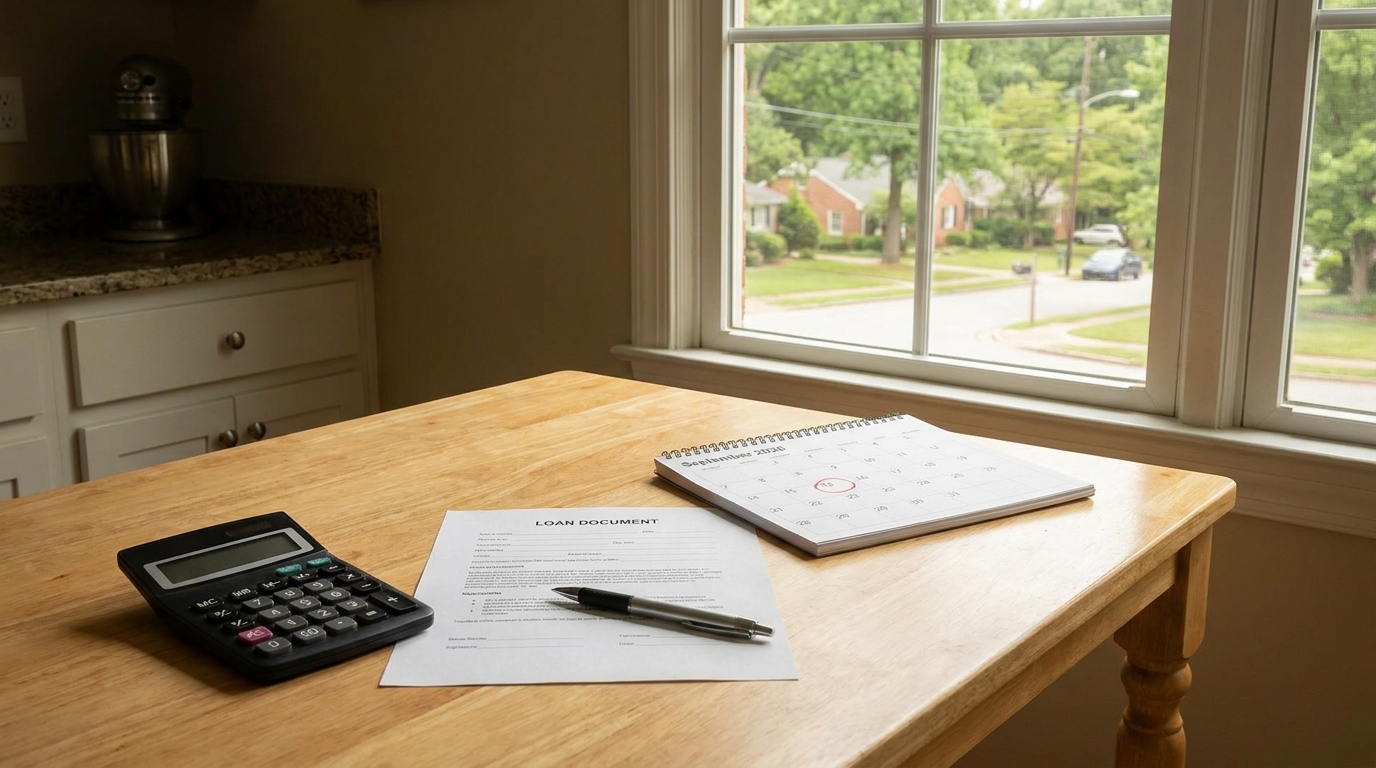
4. Lock-period math for Georgia borrowers under contract
Standard lock lengths are 15, 30, 45, 60, and 90 days. Most 30-day locks are free; 45- and 60-day locks typically cost 0.125%–0.25% in price (often called "pricing hits" on the rate sheet). Where they are offered, 15-day locks price below 30-day (Mo The Broker, 2026 Lock Guide; AmeriSave, 2026).
The instinct in a scary-headline week is to lock for as long as possible. That is exactly when it can cost you the most:
-
A 60-day lock at 0.25% in price on a $350,000 Georgia purchase is roughly $875 paid upfront for two months of certainty.
-
If escrow can close in 21 days because the appraisal has already cleared and underwriting is conditional-approval, a 21- or 15-day lock at par may save that $875 outright — and price a hair better than 30 days.
-
If you genuinely need 45–60 days because of a complex contingency or new construction, the pricing hit is the cost of removing headline risk from your closing — pay it deliberately, not by default.
The practical rule for this week: lock the shortest period that you can confidently close inside of. Have your loan officer confirm in writing the latest possible close-of-escrow date that still beats the lock expiration.
5. Extension fees, in dollars
If your lock expires before you close, most lenders offer extensions at roughly 0.125%–0.375% per 15 days (AmeriSave). On a $400,000 loan, that is about $500–$1,500 per 15-day extension. On a $350,000 Georgia purchase, expect roughly $440–$1,310 for the same.
This matters because there is a math problem every borrower should run before locking:
Extension cost vs. relock-at-market cost. If rates rise 25 bps between your lock and your closing, the lifetime payment increase on a $350,000 30-year loan is roughly $55/month — about $660/year. A single 15-day extension at 0.25% would cost roughly $875 once. If the market is moving against you, an extension can be cheaper than letting the lock die and relocking at a worse rate. If the market is moving with you, an extension is throwing money away that a float-down could have captured instead.
6. Float-downs this week
A float-down lets you lock now and re-price down once if rates fall before closing. Typical mechanics, drawn from lender-published guides:
-
Upfront cost: typically 0.25%–1.0% of loan amount, sometimes baked into the rate (Rocket Mortgage; Chase).
-
Trigger threshold: most lenders require rates to fall by a stated amount, often at least 0.25%, before the float-down can be exercised.
-
One-time use: most float-down options can only be exercised once, and usually inside a specific window before closing.
-
Lender variation: the trigger threshold and eligibility window vary significantly — this is exactly why you need to read your specific lock agreement (CBS News).
When does paying for a float-down actually pencil in a binary-headline week? Roughly when all three of these are true:
-
Your loan is large enough that 25–50 bps of rate movement is real money. On a $350,000 loan, 25 bps is about $660/year in payment; on a $700,000 jumbo it is roughly $1,300/year.
-
The upfront cost is on the lower end (~0.25%–0.5%) and the drop trigger is reasonable (0.25%).
-
You believe the de-escalation path — a formal U.S.-Iran deal or a clean June FOMC — is plausible inside your lock window.
If the float-down costs 1% upfront and requires a 0.5%+ drop to trigger, the option is usually mispriced for the borrower and overpriced relative to the binary nature of this week's news.
7. Same-day relock playbook
If MBS sells off 25+ bps in price intraday on a headline — which has happened repeatedly during this war cycle — most lenders will reprice rate sheets, sometimes more than once in a single day. What a Georgia borrower should ask for, in writing:
-
The exact time the lock will be priced if you say "go" today.
-
The rate-sheet snapshot in effect at that timestamp, not a verbal quote from an hour earlier.
-
A clear statement of the extension fee schedule (per 15 days, and any caps) attached to the lock confirmation.
-
If buying a float-down: the trigger threshold, eligibility window, and number of uses, all in the lock document — not in a follow-up email.
-
A standing instruction for what happens if the lender reprices between your verbal authorization and the written lock confirmation.
None of this is exotic. It is the basic paperwork every borrower is entitled to, and in a normal market most people skip it because the cost of skipping is small. In a binary-headline week, skipping it is how you find out that the rate you thought you had is not the rate on your final disclosure.
8. What to watch next
-
May CPI release on June 11, 2026 — the next major inflation print before the FOMC meeting.
-
June 17, 2026 FOMC decision — the first chance for the Fed to formally respond to the April reacceleration.
-
Any Strait of Hormuz incident or formal collapse/renewal of the ceasefire — either direction is a binary mover for Brent and, by extension, for Treasury yields and Georgia rate sheets (Norada 90-day forecast).
The most useful thing you can do this week is to pre-commit your action level with your loan officer. Examples, not advice: lock if the 10-year Treasury closes above 4.55%; float if it closes below 4.30%; exercise float-down only if Georgia 30-year sheets fall at least 0.25% below your locked rate. Writing the rule down before the headline arrives is the only reliable defense against making a decision in the first ten minutes of a market move.
Sidebar: Plain-English checklist for a Georgia borrower closing in the next 21 days
Bring these questions to your loan officer today:
-
What is the shortest lock period you offer for my file, and what is the pricing difference between 15-, 21-, 30-, and 45-day locks today?
-
What is the extension fee per 15 days, in dollars, on my loan amount? Is there a cap on the number of extensions?
-
Do you offer a float-down on my product? If so: what is the upfront cost, the drop trigger, the eligibility window, and how many times can it be exercised?
-
If MBS reprices intraday after I authorize the lock but before I sign, which rate am I getting?
-
What is the latest realistic close-of-escrow date for my file, and does the lock I am about to take cover that date with at least a few days of cushion?
None of these questions costs anything to ask. In a week where the U.S. inflation rate just printed at its highest level since May 2023 and a single Iran headline can move oil 3–4% before lunch, they are the difference between a lock you control and a lock that controls you.
Related reading
Sources
-
Kiplinger — Inflation Spikes in April CPI Report on Higher Energy Costs
-
FXStreet — CPI inflation rises to 3.8% in April vs. 3.7% expected
-
CNBC Daily Open — Iran ceasefire on life support, market volatility alive
-
U.S. News — Wall Street Mixed, Oil Jumps as Trump Calls Iran Response 'Unacceptable'
-
Fortune — Markets sell off as U.S.-Iran ceasefire plans go nowhere
-
Axios — U.S. and Iran closing in on one-page memo to end war
-
UK House of Commons Library — US-Iran ceasefire and nuclear talks in 2026
-
CBS News — In 8 weeks, the Iran war has dented the U.S. economy
-
Rocket Mortgage — Float-down option
-
CBS News — What is a mortgage rate float down and is it worth it?
-
Bankrate — Today's mortgage and refinance rates, May 1, 2026
-
Norada Real Estate — Mortgage Rates Forecast: May to July 2026